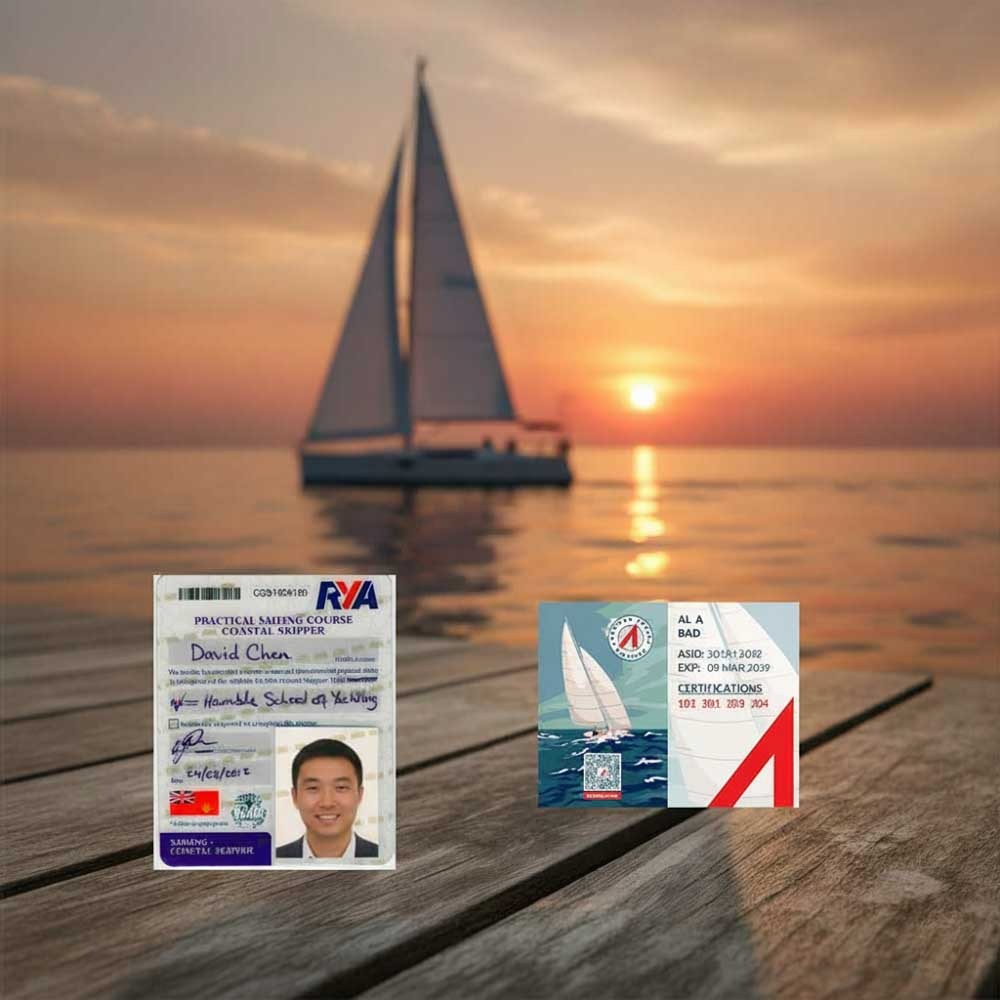
Why is certification important
Getting your sailing certification isn’t just a piece of paper—it’s about safety, competence and confidence. Whether you’re day‑sailing in tidal harbours or crossing oceans, certification:
- Shows you know how to handle the boat, from sail trim to basic navigation—a reassurance for charter companies, insurers and crew.
- Enables you to borrow, rent or charter almost anywhere: charter operators often insist on recognised ratings.
- Teaches the lingo—you’ll speak confidently about tidal gates, moorings, reefing and VHF protocols.
- Serves as a solid foundation for further qualifications. Many sailors start with a coastal certificate and grow into offshore or ocean‑class passages.
- For you embarking in sailing, it’s a way to get afloat, safe and smart—without starting at zero.
It matters for skipping the line—and knowing you really can take command of your adventure.
ASA & NauticEd Sailing Certification Courses and Structure
If you’re based in the Americas or charter often from US or Caribbean fleets, American Sailing Association (ASA) is a common benchmark. Their system is a clear ladder.
NauticEd relates fairly directly to the ASA levels. For example: ASA 101 ~ NauticEd Introduction and Basic Sailing Skills; ASA 104 ~ NauticEd Bareboat Charter Master, etc. NauticEd tends to have more online theory, multimedia content, and stricter competence assessments. (support.nauticed.org)
- ASA 101 – Basic Keelboat Sailing
Covers fundamentals: sail trim, tacking, basic berth handling—perfect for absolute beginners. - ASA 103 – Basic Coastal Cruising
Adds navigation (chartwork, waypoints), night sailing, anchorages; good for weekend coastal trips. - ASA 104 – Bareboat Cruising
Hands you the skills to rent and skipper a bareboat safely—includes provisioning, crew management. - ASA 105 – Coastal Navigation
Position fixing, tides, pilotage—great backup to GPS decisions. - ASA 106 – Advanced Coastal Cruising
Heavy weather skills, long‑distance coastal planning. - ASA 108 – Celestial Navigation
Traditional navigational skills—nice to have offshore backup. - ASA 114 – Cruising Catamaran
For twin‑hulled craft—popular for modern bareboat fleets.
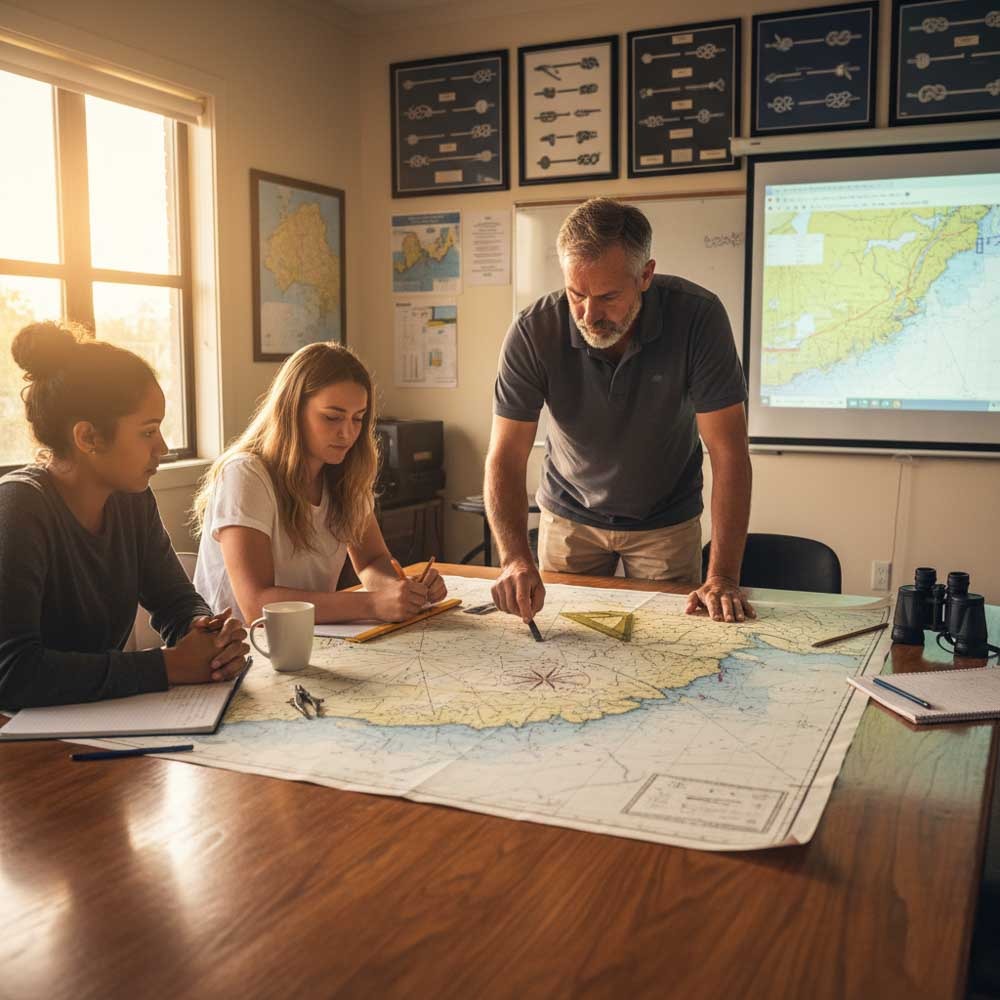
Courses are modular—you can take just the 101‑104 strip or go higher as you gain comfort. Many charter companies ask for ASA 104 or 106 depending on your intended waters.
RYA Sailing Certification Courses and Structure
On the other side of the world (and common in Europe, South‑Pacific, Asia), Royal Yachting Association (RYA) courses are built around ICC (International Certificate of Competence) pathways:
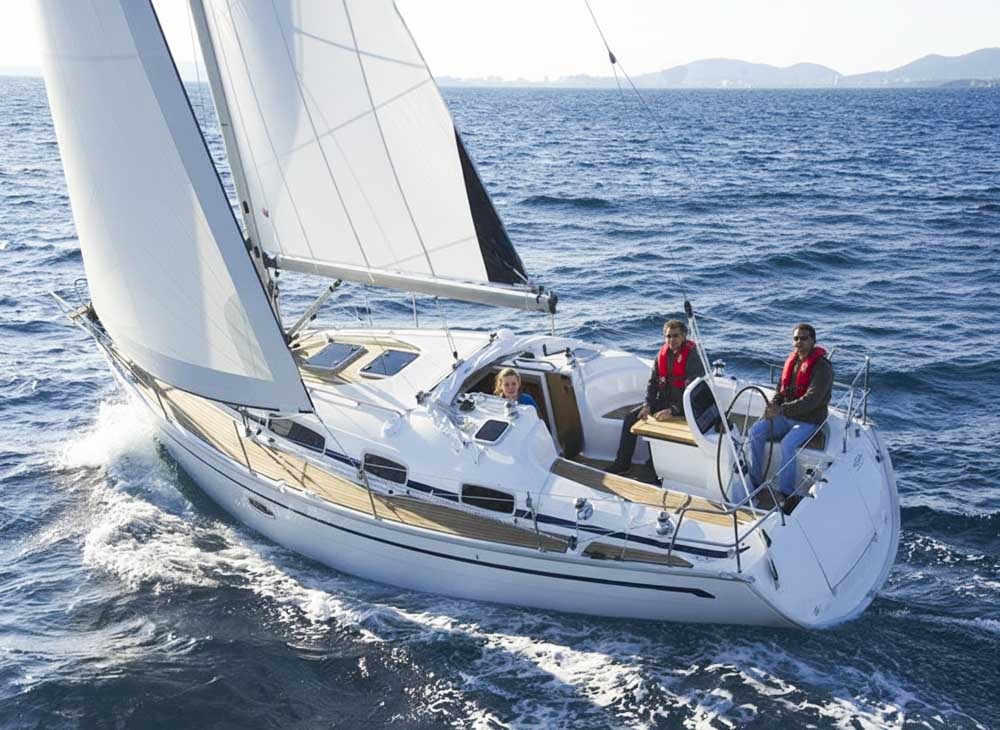
- RYA Start Yachting / Competent Crew – entry point for complete novices; teamwork, sail handling basics.
- RYA Day Skipper (Theory & Practical) – coastal navigation, pilotage, planning—widely recognised baseline for chartering small yachts.
- RYA Coastal Skipper – enhanced planning, passage making, night sailing.
- RYA Yachtmaster Offshore – for independent long‑distance coastal and offshore cruising; required for chartering professionally.
- RYA Yachtmaster Ocean – includes celestial navigation and ocean passage planning; prestigious and robust for blue‑water.
Each step builds sea experience; to earn the Yachtmaster titles you need logged miles, qualifying passages, and exams.
Comparisons: which Sailing Certification is required for given voyages
Here are suggested minimum sailing certifications or experience for various sample voyages, with ASA, NauticEd, RYA paths. These are approximate guidance; actual requirements depend on vessel, weather, charter company, local regulations.
| Voyage | ASA, NauticEd Course Required | RYA Equivalent | Notes |
| Day‑sail in familiar tidal waters | ASA 101 (maybe 103) | RYA Day Skipper (and ICC) | ASA very basic; RYA emphasises teamwork. |
| Charter 40 ft monohull in the Med | ASA 104 (Bareboat Cruising) | RYA Day Skipper (and ICC) | Med charter companies often ask for these. |
| Overnight crossing Poole → La Hague (~60 Nm) | ASA 104 + 105 or 106 | RYA Coastal Skipper | Adds navigation/tides, some night sailing. |
| Miami → Abacos (~150 Nm) | ASA 106 + 108 (esp. navigation) | RYA Coastal Skipper or Yachtmaster Offshore | ASA 108 gives celestial backup; RYA’s Coastal Skipper accepted regionally. |
| Ocean trip Melbourne → Whangarei NZ (~1200–1300 Nm) | ASA 106 + 108 + offshore experience | RYA Yachtmaster Ocean (plus prep) | Significant requirements on both; RYA gives prestige, ASA flexible and modular. |
Comparison table including location and costs
Below is a rough comparison of where these sailing certification programs are strongest, and typical costs. Actual prices depend heavily on school, location, boat type, and whether you do intensive or spread‑out courses.
| Organisation | Geographic strength / Recognition | Typical cost range (for moderate voyage‑suitable certification) | Notes on cost factors |
| ASA | Strong in the USA; recognised elsewhere; many charter companies accept ASA + International Proficiency Certificate. | For a Bareboat Cruising course (ASA 104) plus coastal cruising (101 & 103), expect maybe USD 800‑1,500 depending on location, boat size, duration. ASA 101 is cheaper; ASA 104 more expensive. (These are rough; plus travel, accommodation etc.) | Cost depends on how many days on water, overnight vs day, instructor‑to‑student ratio, boat type. Also theory vs practical. |
| NauticEd | International. Strong online theory + partner schools worldwide. | Theory modules are relatively low cost; practical training adds more. For Bareboat Charter Master or similar, might be USD 1,000‑2,500 depending on location, boat, duration. | Cost savings possible if you spread theory online; but practical costs (charter, instructor, boat) dominate. |
| RYA | UK & Europe strongest; huge network globally; widely respected. ICC from RYA is valid in many countries. | For comparable “bareboat / charter capable” level (Day Skipper + navigation + coast trips) maybe GBP 800‑1,500 in UK; in Europe somewhat higher if travel & lodging included. For Yachtmaster Offshore or Ocean, costs rise significantly (prep courses, exams, sea time). | Several cost components: theory course, practical course (days onboard), exam fees (e.g. Yachtmaster exams), gear, sea time accrual, travel, food, boat hire. The more remote or high spec boat, the more expensive. |
If we try converting approximations:
- A UK RYA Day Skipper + theory + practical might cost ~ AUD 1,500‑2,500 (depending on location), EUR ~900‑1,400, USD ~1,000‑1,600.
- Yachtmaster Offshore prep + exam likely significantly more (AUD several thousands, etc.).
Recommendations
Here are some suggestions for sailing certification based on what you want:
- If your sailing will mostly be coastal / charter holiday style, with day sails or short passages, you don’t need to go all the way to Yachtmaster or equivalent. ASA 104 or RYA Day Skipper (with good navigation) is likely sufficient.
- If you plan for night sailing, longer passages, or want more independence (self‑skipper), bump up to ASA Bareboat + high experience or RYA Coastal Skipper / Yachtmaster. Make sure you do night passages and navigation under real conditions.
- For ocean crossings, you’ll want the top certifications: NauticEd Captain/Offshore or RYA Yachtmaster Ocean. Also ensure you have the required qualifying passages, miles, emergency preparation, radio/first aid, etc.
- Consider where you want to sail: if in UK/Europe or chartering in Med, the RYA certifications (and ICC) are especially well accepted. If in USA/Caribbean, ASA or NauticEd may be more practical. But many certificates are accepted internationally; always check with the charter company.
- Also think about your learning style: If you prefer online theory + self‑paced, NauticEd wins. If you want in‑person, traditional classroom + sea time, RYA or ASA schools may deliver more hands‑on, although RYA has a number of the theory courses available on line.
My personal experience — I sailed for quite some years before embarking on formal training and certification, and purely because I was based in the UK at the time I chose the RYA route. I even decided to start right back at competent crew level, regardless of my experience, as I wanted to iron out bad habits and fill any gaps. The RYA structure and progression steps has certainly provided me with the knowledge and skills to sail and manage a boat confidently, but as I often say – every sailing trip is still an adventure and a lesson in its own right.
Read Next
Ready to Set Sail? Download my FREE Man Overboard Comprehensive Guide, subscribe for monthly tips, and explore my Resource Vault to make your sailing experience easier. Your adventure starts now.