Introduction
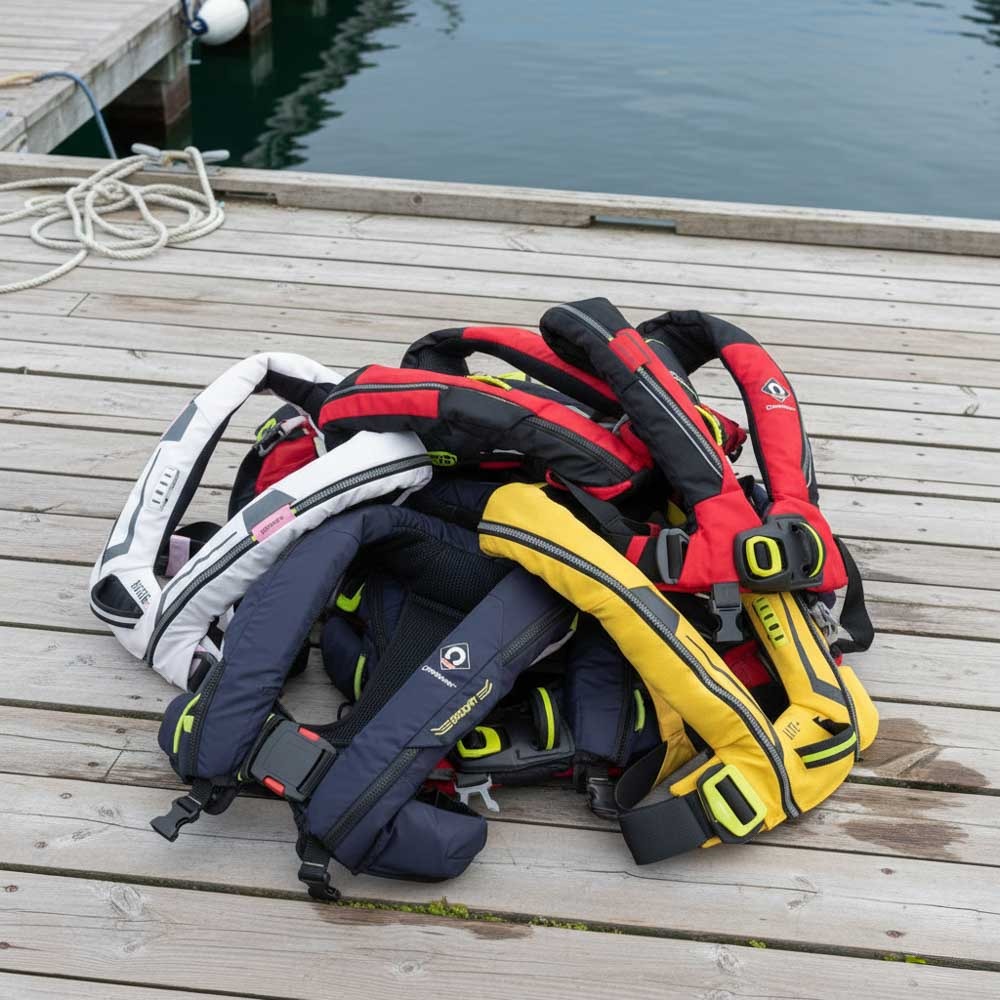
It’s universally acknowledged among sailors that even if you have the best lifejackets for sailing, it only truly matters once you’re in the water — but that’s exactly when it counts most. The goal of this review is to help every sailor, from weekend tinkerers to ocean racers, find the best lifejacket for sailing in this year.
My ranking considered comfort, buoyancy rating, harness quality, inflation reliability, how difficult it was to re-pack, and value for money. Rather than conducting short-term testing I spoke to the sailors who wear them regularly and over a longer term in real sailing conditions — on and offshore. And I tried on all that were willingly handed over. After collating this information along with my own experiences and wardrobe I short-listed the following.
Best Lifejackets for Sailing – Top Picks Summary:
- Best Overall – Spinlock Deckvest 6D
- Best Offshore – Crewsaver ErgoFit+ 190N
- Best Coastal – Spinlock Deckvest LITE+
- Best Women’s – Baltic Athena 165
- Best Kid’s – (8–15 yrs) Spinlock Cento Junior
- Best Budget – Crewsaver Crewfit 165N Sport
A small confession: I once forgot to re-arm a canister before a Biscay crossing — a sharp reminder that gear checks matter as much as brand names.
[affiliate opportunity]: “Manual and auto re-arming kits that fit most ISO-approved lifejackets.”
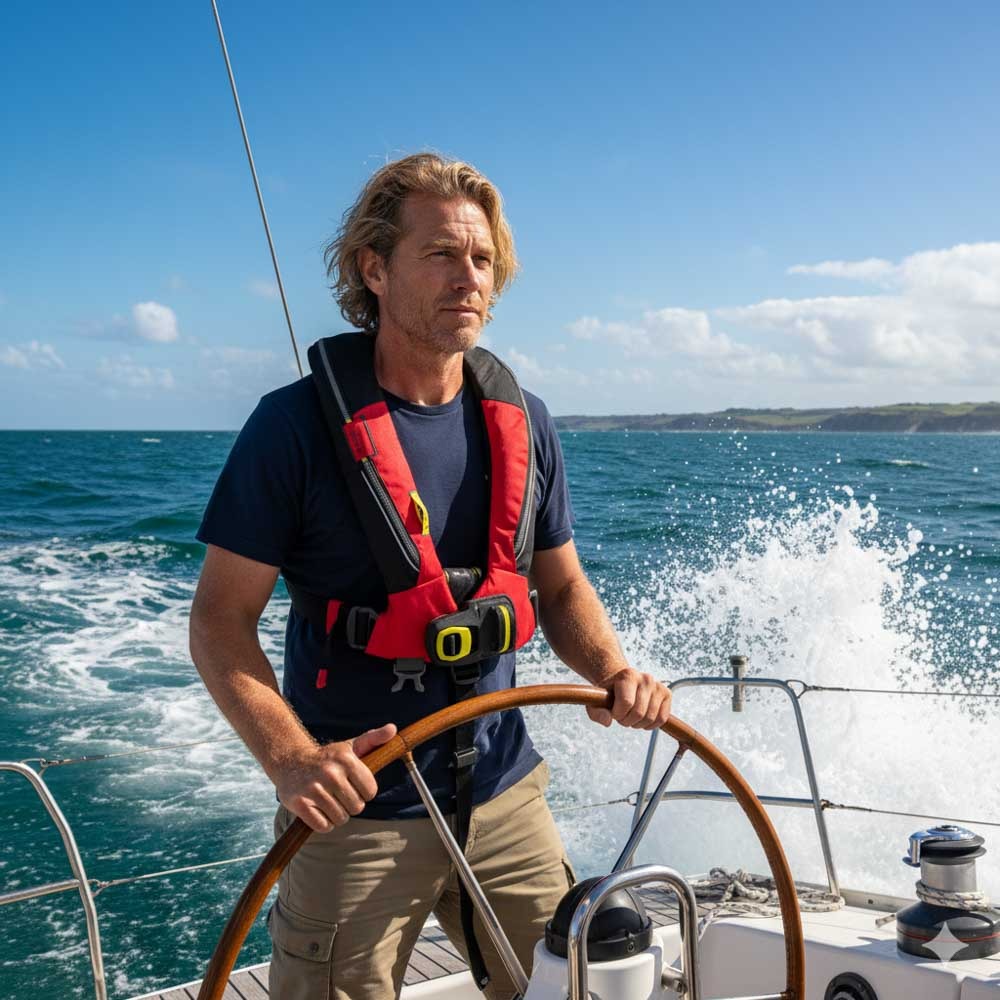
Best Overall – Spinlock Deckvest 6D
Quick Review: Spinlock’s flagship Deckvest 6D remains the yardstick for serious sailors. It’s built for comfort, with a curved low-neck collar and a range of smart safety extras.
Key Specs: 170 N (also 275 N version); automatic inflation; Harness Release System (HRS) option; UML Pro Sensor Elite trigger; ISO 12402-3/-2 certification.
Features: Integrated sprayhood, Pylon 360° light, Lume-On bladder illumination, crotch strap, five-year service life registration.
Why You’d Want It: Equally at home on a Solent race or Biscay passage. Superb fit, reliable inflation, and visible design.
Why Not: Premium price and more bulk than minimalist vests.
Price / Where to Buy: ~£239 / €280 / $300 from Crew Safe UK
Best Lifejackets for Sailing
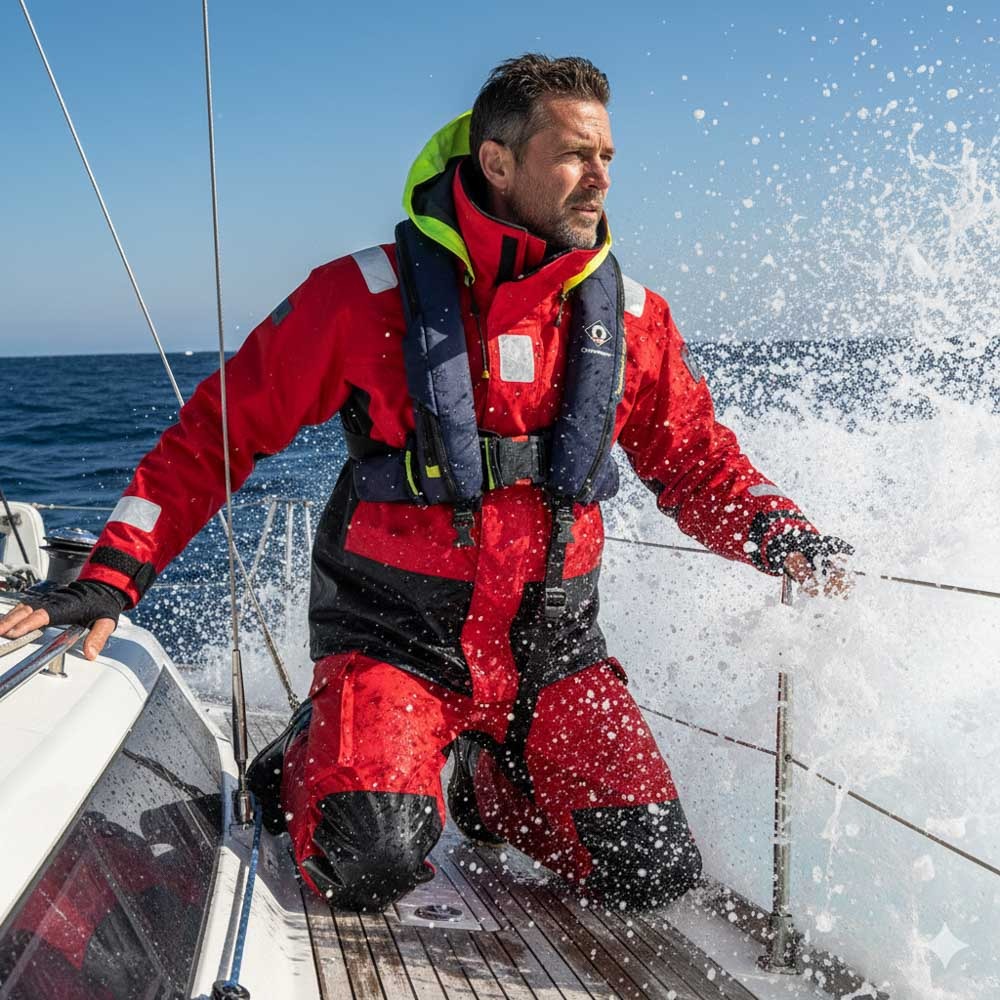
Best Offshore – Crewsaver ErgoFit+ 190N
Quick Review: Designed for blue-water sailors who might spend nights on deck, the ErgoFit+ 190N is built to handle heavy weather.
The Best Lifejackets for Sailing
Best Lifejackets for Sailing
Key Specs: 190 N buoyancy; ISO 12402-3 and 12401 harness certified; “Halo” sprayhood with double zip for visibility; EXOLOK cylinder lock; Hammar or automatic inflator versions.
Features: Sculpted bladder for face-up rotation, easy side buckle, tether point, light attachment, AIS beacon compatibility.
Why You’d Want It: Offshore confidence — high buoyancy and an excellent hood that stays clear of the face.
Why Not: Slightly heavier, bulkier collar; needs regular inspection.
Price / Where to Buy: ~£199 / €230 / $250 from Crewsaver
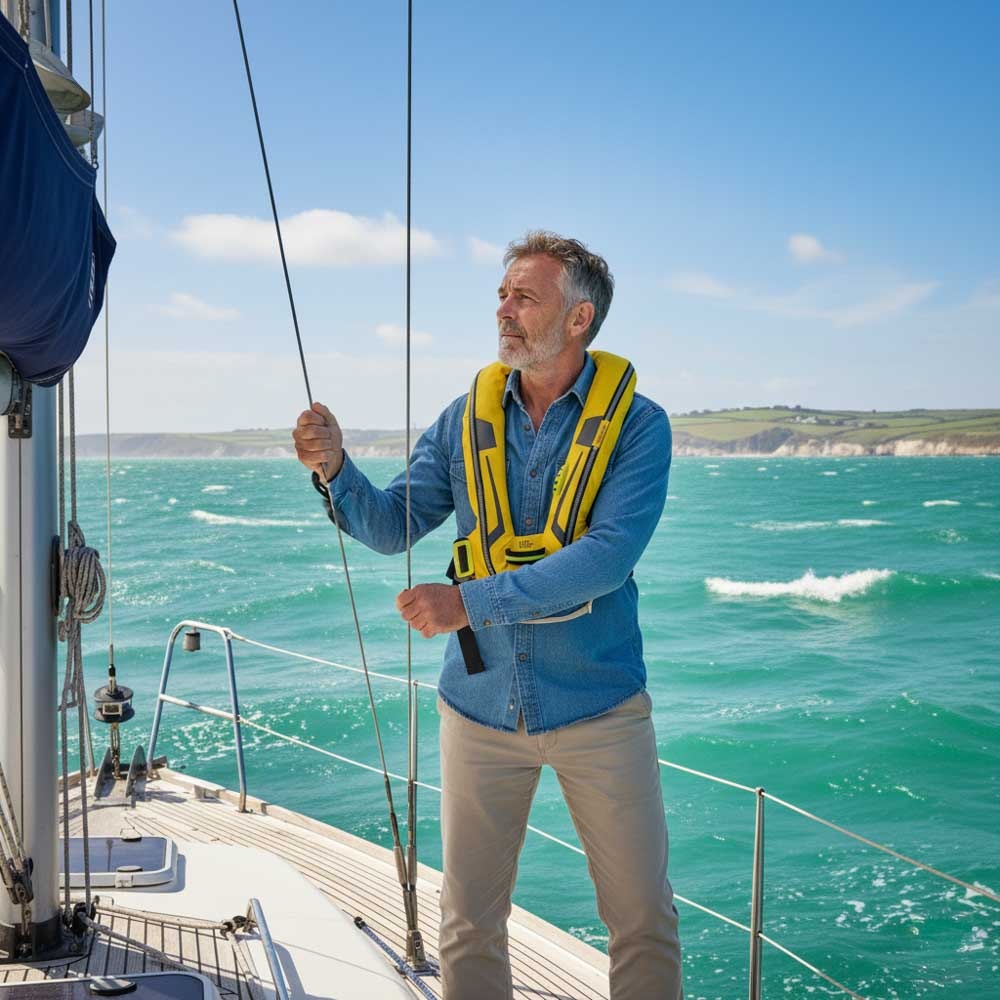
Best Coastal – Spinlock Deckvest LITE+
Quick Review: The Deckvest LITE+ is a lighter, low-profile version ideal for day sailing and coastal passages, yet it includes an integrated harness.
Best Lifejackets for Sailing
Key Specs: 170 N buoyancy; UML Mk5 inflator; ISO 12402-3 lifejacket and 12401 harness; single-crotch strap; 5-year Through-Life Support.
Features: Compact fit, harness soft loop, optional light kit, multiple colours.
Why You’d Want It: Comfortable enough to forget you’re wearing it. Great for weekend sailors who still clip on when the breeze pipes up.
Why Not: No sprayhood or built-in light as standard — for that, upgrade to the 6D.
Price / Where to Buy: ~£162 / €190 / $210 from Spinlock
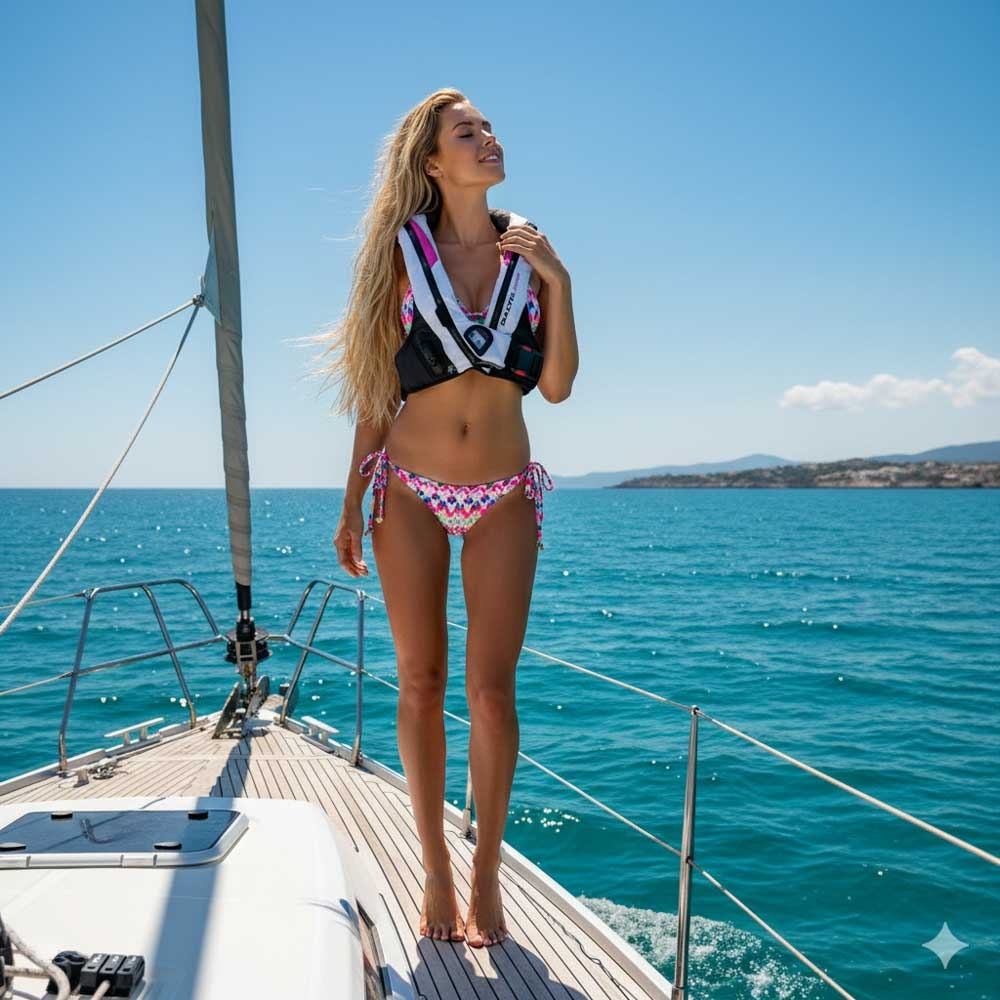
Best Women’s – Baltic Athena 165
Quick Review: Designed specifically for women, the Athena 165 fixes what most unisex lifejackets get wrong — fit. It’s shaped for comfort over foul-weather gear and doesn’t press awkwardly at the chest.
Key Specs: 165 N automatic inflation; one size fits 40–120 kg; optional harness version; ISO 12402-3 certified; 5-year warranty.
Features: Valve under bust, soft padded closure, discreet profile, range of colours.
Why You’d Want It: Excellent ergonomics and lighter overall feel; genuinely comfortable for all-day wear.
Why Not: Slightly less buoyant than offshore models; limited accessories.
Price / Where to Buy: ~£155 / €180 / $195 via Marine Super Store
Best Lifejackets for Sailing
Best Kid’s – (8–15 yrs) Spinlock Cento Junior
Quick Review: Finally, a proper sailing lifejacket for children that feels like grown-up gear, not a pool toy. The Cento Junior brings Spinlock’s design DNA to the 20–50 kg range.
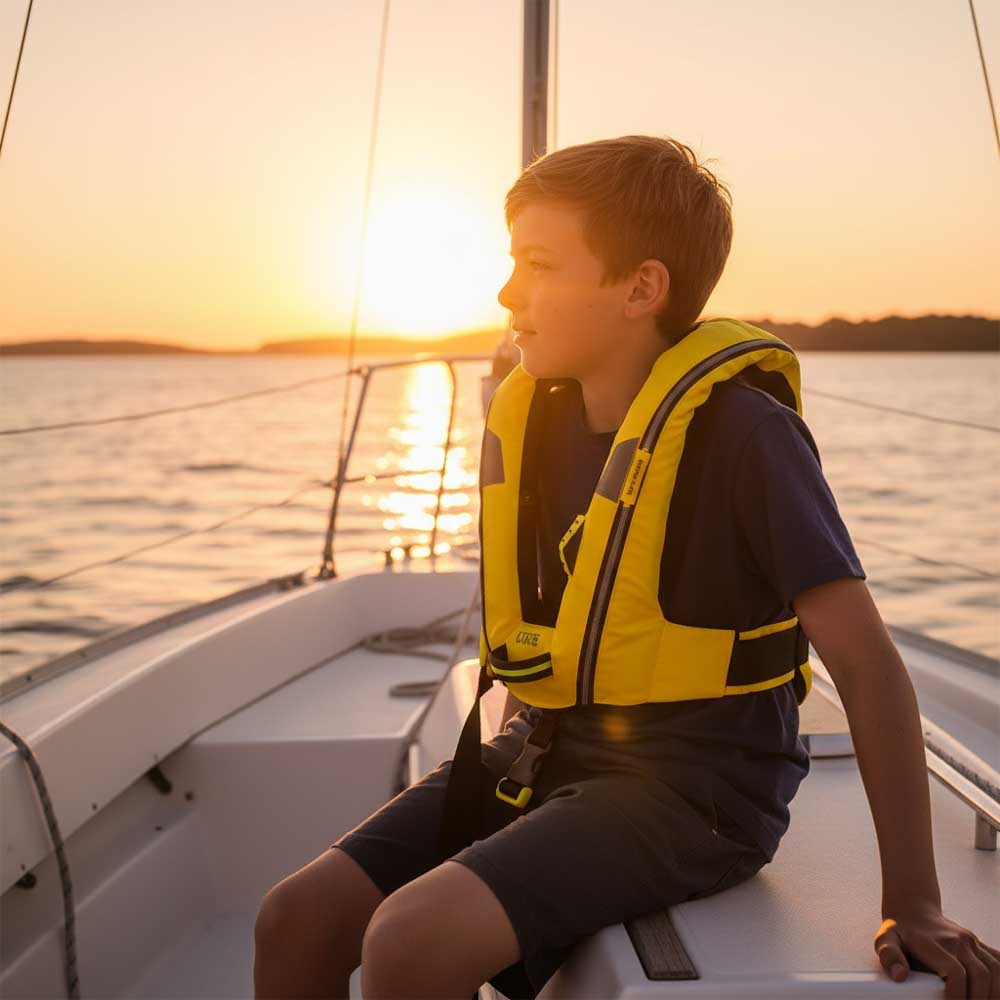
Key Specs: 100 N buoyancy; ISO 12402-4 certified (child lifejacket standard); crotch strap; soft harness loop; manual pull-cord.
Features: Slim fit for active kids, bright colour panels, soft neck support, zip front with buckle.
Why You’d Want It: Encourages kids to wear it without fuss — light, comfy, and secure.
Why Not: Manual inflation (by design) — adults must ensure readiness.
Price / Where to Buy: ~£98 / €115 / $125 (Spinlock)
Best Budget – Crewsaver Crewfit 165N Sport
Quick Review: Proof you don’t need to spend a fortune to stay safe. The Crewfit 165N Sport gives automatic inflation, ISO certification, and Crewsaver reliability at an affordable price.
Key Specs: 165 N buoyancy; automatic or manual inflator; ISO 12402-3; optional harness version.
Features: Lightweight outer cover, CO₂ indicator window, ergonomic neck fit.
Why You’d Want It: Ideal for inshore sailing, club racing, and guests aboard. Compact, simple, dependable.
Why Not: Lacks offshore extras (hood, light, AIS compatibility).
Price / Where to Buy: ~£85 / €100 / $110 from Marine Super Store
Buyer’s Guide – What to Look for in a Lifejacket
Certification & Buoyancy
Look for ISO 12402 approval (Europe) or USCG Type V (US). Ratings range from 150 N (inshore/coastal) to 190–275 N (offshore/heavy gear). Higher numbers mean stronger lift and faster rotation face-up.
Comfort & Fit
Basically, you’ll wear it more if it’s comfortable. Adjust shoulder and waist straps snugly but not tight. Try models like the Spinlock LITE+ or Baltic Athena for lightweight comfort.
Inflation Systems
- Automatic: Inflates on water contact (UML Pro Sensor or Mk5).
- Hydrostatic (Hammar): Inflates under pressure — ideal offshore, avoids false triggers.
- Manual: Requires pull-cord; simple and cheap but riskier solo.
Harness Integration
If you sail at night or offshore, choose a lifejacket with an integrated harness for clipping to jacklines. All Spinlock “+” and ErgoFit+ models are certified to ISO 12401.
Maintenance
Inflatable jackets require annual checks. Replace CO₂ cylinders and inflators as specified. Spinlock offers a 5-year registration; Crewsaver provides clear self-check kits.
Extra Features
Sprayhood, light, AIS beacon pocket, leg strap, whistle, and reflective tape. Small details — like Spinlock’s Lume-On lights or Crewsaver’s EXOLOK cylinder lock — make real differences at sea.
Price & Value
Generally, good lifejackets start near £80, but expect to spend £150–£250 for all-day comfort and reliability. As with anchors and autopilots, the cheapest can cost more later.
Best Lifejackets for Sailing
Comparison Table
| Model | Category | Buoyancy | Key Features | Price (GBP / EUR / USD) |
| Spinlock Deckvest 6D | Best Overall | 170 N / 275 N | Sprayhood, Pylon light, Lume-On, HRS | 239 / 280 / 300 |
| Crewsaver ErgoFit+ 190N | Best Offshore | 190 N | Halo hood, EXOLOK, Hammar option | 199 / 230 / 250 |
| Spinlock Deckvest LITE+ | Best Coastal | 170 N | Lightweight, harness, 5-year TLS | 162 / 190 / 210 |
| Baltic Athena 165 | Best Women’s | 165 N | Women’s fit, compact design | 155 / 180 / 195 |
| Spinlock Centro Junior | Best Kid’s (8-15 yrs) | 100 N | Child fit 20–50 kg, manual inflate | 98 / 115 / 125 |
| Crewsaver Crewfit 165N Sport | Best Budget | 165 N | Entry-level, ISO certified | 85 / 100 / 110 |
Prices are indicative only
Final Verdict
Finally, if I could only wear one, it would be the Spinlock Deckvest 6D — it’s the one I forget I’m wearing until it saves the day. For blue-water passagemakers, the Crewsaver ErgoFit+ 190N earns its keep every time the barometer drops. Coastal cruisers will love the Deckvest LITE+, and for women sailors the Baltic Athena 165 remains the best-fitting jacket afloat.
And if you’re kitting out a crew or just getting started, the Crewfit 165N Sport proves that good safety doesn’t need a platinum card.
But, most importantly, for the next generation of sailors. The Spinlock Cento Junior keeps kids safe without complaints. I’ve seen too many bulky orange foam vests end up on cockpit floors—this one stays on, smiles intact.
I once wore a cheap foam PFD for a 40-mile coastal delivery — by hour six, I’d have swapped it for anything with padding that didn’t gnaw my neck. Lesson learned: the best lifejacket isn’t the one you buy for inspection day; it’s the one you actually wear.
So wear it, service it, and sail knowing that if the sea decides to teach another lesson, you’ll be ready.
Terminology
Well I am the first one to pull someone up if they start to introduce fancy new terms. That doesn’t help anyone.
UML stands for United Moulders Ltd, a British company that manufactures automatic inflation mechanisms for lifejackets (not to be confused with the software term “Unified Modelling Language”!).
So here’s what it means for your lifejacket:
- UML Auto Inflator: This mechanism automatically activates when it gets wet. It uses a dissolving paper capsule that releases a spring-loaded pin, puncturing the CO₂ cylinder to inflate your lifejacket within a couple of seconds.
- UML Pro Sensor / MK5 / Elite: These are different versions of UML’s inflators.
- MK5 → Reliable and common on many mid-range jackets.
- Pro Sensor Elite → Adds a clear window so you can visually check both the gas cylinder and activation head status — very handy for quick pre-sail inspections.
- Manual UML → Same unit but only fires when you pull the cord — often used as a backup or for racing rules compliance.
- Servicing: UML mechanisms are easy to re-arm — just replace the CO₂ cylinder and the little activation capsule (they usually last 2–3 years unopened).
In short:
To conclude, a “UML” lifejacket means it uses a proven automatic inflation system from a trusted brand that’s used worldwide — reliable, easy to check, and quick to service.
Now, there is an argument on whether it’s best, or safest, to have a self-inflating or manual inflating lifejacket. The self-inflating is certainly well tested and proven, and great for anyone overboard that’s incapacitated. The counter is some sailors don’t like the idea of a self-inflating pinning them under a sail in the water. I prefer the former, but I’ll leave the argument for the Sailing Club bar.
Either way, if flying don’t forget to check with the airline on stowage requirements, removal of the canister and to take a spare.
Read Next
Best Lifejackets for Sailing
- Understanding Sailing Certification Levels – how to qualify and stay legal at sea
- Reading Weather Patterns for Safe Voyages – practical weather awareness for sailors
Ready to Set Sail?
Download our FREE Sailor’s Safety Essentials Guide, subscribe for monthly tips, and explore hand-picked sailing gear to make your next passage smoother. Your adventure starts now.