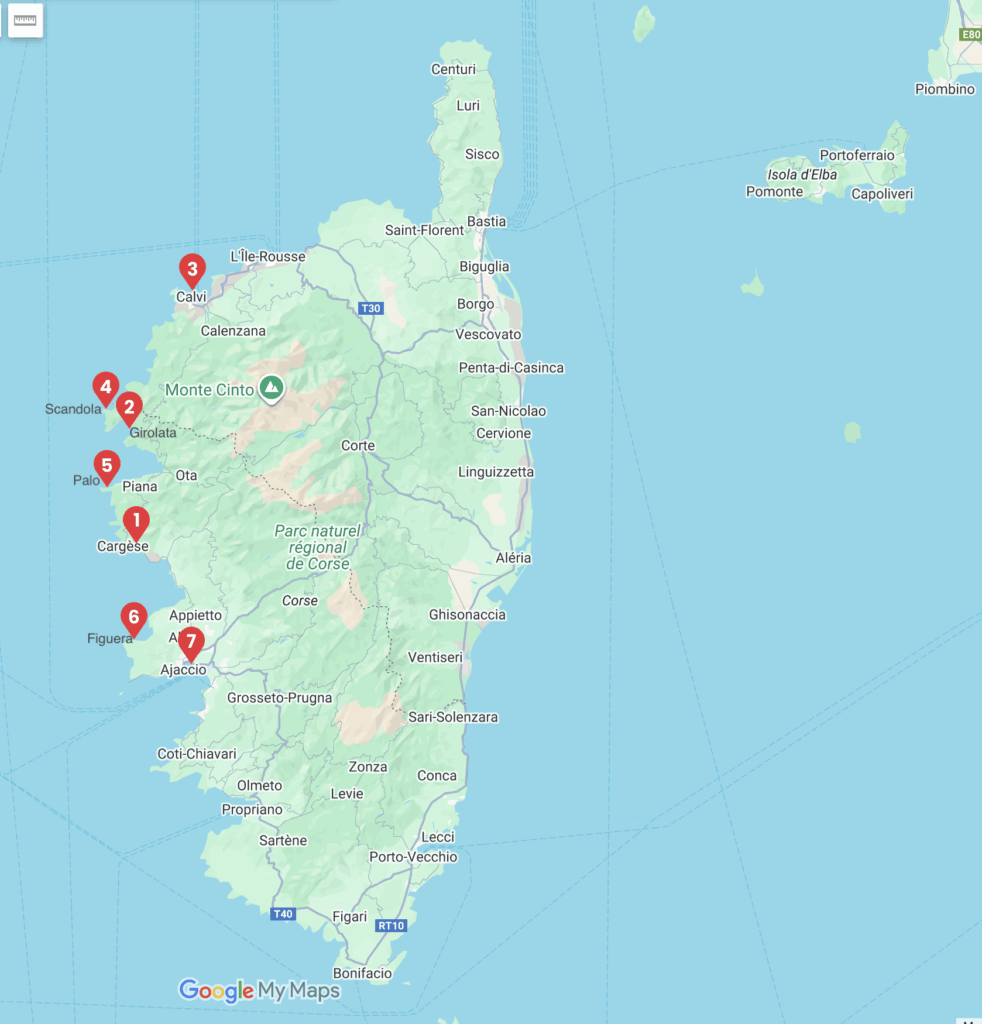
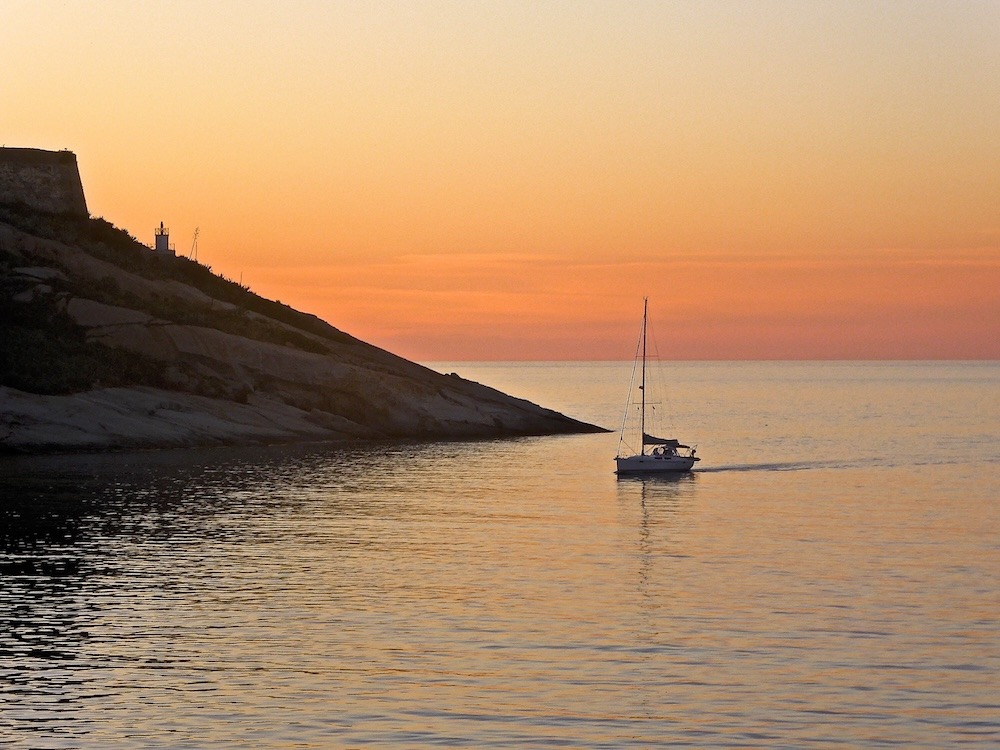
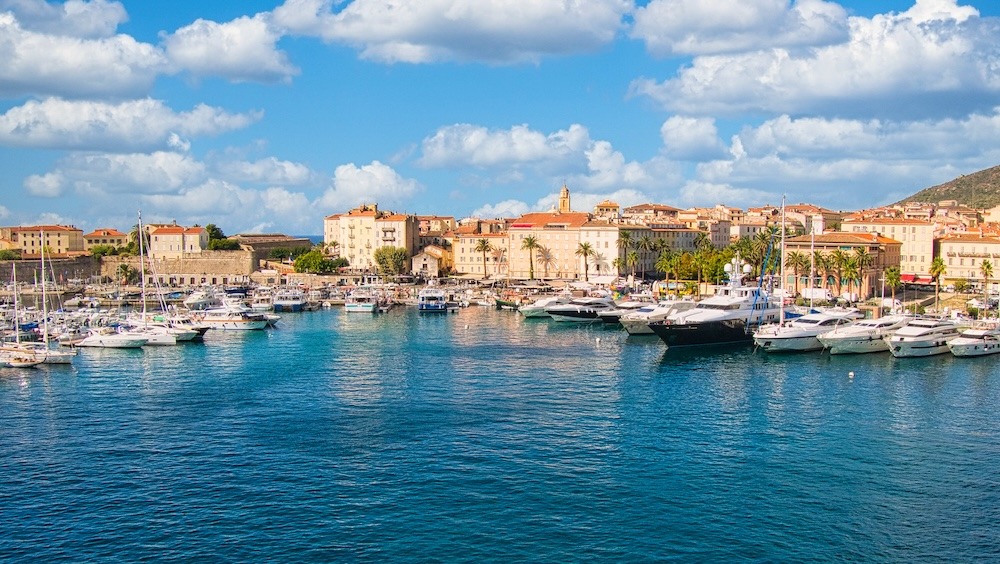
Seven easy days of North Corsica sailing from Ajaccio weave together red cliffs, quiet coves, and village harbours. You’ll hug the wild west coast, slip into Girolata and Scandola, then arc north to Palo before looping back via Figuera for swims, short hops, and unhurried evenings.
A laid-back week of red cliffs, hidden coves and coastal charm—North Corsica’s most scenic sailing route made effortless.
Overview
North Corsica’s west coast feels wild and sculpted, but the distances are kind, which is why so many skippers fall for this stretch on their first charter. From Ajaccio’s busy bay you slide quickly into a coastline of cliffs, headlands and deep inlets that look dramatic without being overwhelming. Cargèse and Girolata show two very different faces of Corsican life: one a village with Greek heritage and a proper harbour, the other a tiny boat-access settlement tucked into a natural amphitheatre. Calvi brings a big, handsome citadel and more restaurants than you’ll manage in one week. Beyond that, the Scandola reserve and the calanques around Piana look almost unreal in the late afternoon light, all red rock and turquoise water, while anchorages like Palo and Figuera give you quieter nights under the stars. Sailing-wise, this North Corsica sailing loop keeps hops short, with one slightly longer coastal leg. It suits a mixed-experience crew who want proper scenery and characterful stops without long days bashing to windward. One word of warning from my own logbook: it’s easy to lose track of time over a late Corsican dinner, so keep an eye on the alarm for the next morning’s departure.
Special Gems
Even in a well-sailed region, this route leaves room for small discoveries. Between Ajaccio and Cargèse, several modest bays offer surprisingly good holding and far fewer boats than the headline names; slipping into one for lunch can feel like stealing back an hour from the crowd. Around Girolata and Scandola, local operators run low-impact boat tours that thread deeper into the caves and rock formations than you might want to take a charter yacht – a worthy treat on a non-sailing afternoon.
On the northern stretch, it’s worth keeping an eye out for less-publicised snorkelling spots, where rocky reefs sit close to the surface and the water stays bright even late in the day. Inland, almost every village hosts its own small fête or evening market in season; if timings align, an impromptu detour by taxi from Ajaccio or Calvi turns into a memorable night among locals. And don’t underestimate the “hidden gem” of an extra-early start: a dawn departure from a quiet anchorage is one of the best Corsican souvenirs you can pack.
Beyond the main stops, a few extras can make this North Corsica sailing week feel even richer. From Calvi, the little train to L’Île-Rousse gives a day off the helm and a chance to explore another attractive town with its morning food market.
Inland from the coast, hill villages such as Pigna offer craft workshops, small restaurants and, in summer, concerts of Corsican polyphonic singing during events like Festivoce—well worth considering if your dates line up. Check current schedules before planning, as timings vary year by year.
Food lovers could happily build a mini-tour around local produce: cured meats, brocciu cheese, chestnut flour cakes and strong local wines. Places like the Castellani grocery in Piana blur the line between shop and restaurant, making it easy to sample and stock up at the same time.
If you enjoy photography, early-morning departures or late-afternoon arrivals at Scandola and the Piana calanques reward you with softer light and fewer tourist boats in frame. Just remember that every extra stop you squeeze into the plan eats a little into your rest time, so be realistic with the crew and let the week breathe.
Passage Conditions & Navigation Profile
Prevailing winds are westerlies to west-northwest, especially in summer. Tides 30-60cm
Read MoreLess
Weather, sea, wind considerations: On Corsica’s northwest coast the prevailing winds are westerlies (Maestrale / west-northwest), especially in summer, often reaching 15–25 knots. At times stronger winds such as Libeccio (south-west) sweep in, bringing rough seas and choppy swell. Sea state can become steep near exposed headlands; under normal conditions calmer inside sheltered bays.
Level of navigation required: Sailing close along the coast or between nearby coves can often remain line-of-sight. For passages past headlands, through narrow channels or when seas build under westerlies/south-westerlies, it’s advisable to follow a prepared navigation plan with up-to-date charts.
Tides and currents: Tidal ranges around Corsica are very small — typically 30–60 cm — so tidal rise/fall has minimal effect on cruising or anchoring. There are no widely reported strong “tidal gate” currents or races along the usual cruising grounds on the northwest shore; currents remain weak under ordinary conditions.
Day 1 – Ajaccio to Cargèse
Ajaccio is a busy but friendly base. You start among ferries, cruise ships and a forest of masts, with the citadel and old town stacked above the waterfront. Once clear of the bay, the city falls behind and the coastline becomes wilder: low hills of maquis, occasional sandy beaches and deeper blues under the keel. Arriving in Cargèse, the mood changes. The harbour lies tucked under a hillside village, with pastel houses and two churches facing one another across a small ravine. From the water you see masts gathered behind the breakwater, fishing boats on the quay and a few café terraces looking back at you. It feels like the right scale for the first night of a North Corsica sailing loop: enough services to make life easy, but still a place where the sound of halyards and cicadas carries across the bay after dark.
21 nautical miles
4hrs 30mins sailing time
LUNCH STOP:none planned
MOORING:Cargèse marina with water, power, fuel and supermarket nearby; contact harbour for current seasonal rates.
Description
Ajaccio is a busy but friendly base. You start among ferries, cruise ships and a forest of masts, with the citadel and old town stacked above the waterfront. Once clear of the bay, the city falls behind and the coastline becomes wilder: low hills of maquis, occasional sandy beaches and deeper blues under the keel. Arriving in Cargèse, the mood changes. The harbour lies tucked under a hillside village, with pastel houses and two churches facing one another across a small ravine. From the water you see masts gathered behind the breakwater, fishing boats on the quay and a few café terraces looking back at you. It feels like the right scale for the first night of a North Corsica sailing loop: enough services to make life easy, but still a place where the sound of halyards and cicadas carries across the bay after dark.
Attractions
If you have time before leaving Ajaccio, a quick wander up to Napoleon’s birthplace and the old town streets helps set the scene for Corsica’s complicated history. In Cargèse itself, the twin churches are the star: one Latin, one Greek, both worth a quiet visit. You can stroll up from the port to the village square, grab an ice cream or coffee, and look back at your boat below. Several restaurants and cafés serve local dishes, from simple grilled fish to heartier Corsican fare; bookings are wise in high season. A short taxi or scooter ride opens up beaches around Sagone Bay if the crew want more swimming. On one charter I misjudged how long the crew would linger over dessert here. We ended up walking back to the pontoon at midnight, full of chestnut cake and already renegotiating the departure time for the next morning.
Cautions
Expect harbour traffic and wash leaving Ajaccio; Cargèse entrance can have swell in strong westerlies, follow updated charts.
Facilities
Ajaccio and Cargèse provide full marina services: water, electricity, fuel, groceries, restaurants; medical and pharmacies in Ajaccio.
Day 2 – Cargèse to Girolata
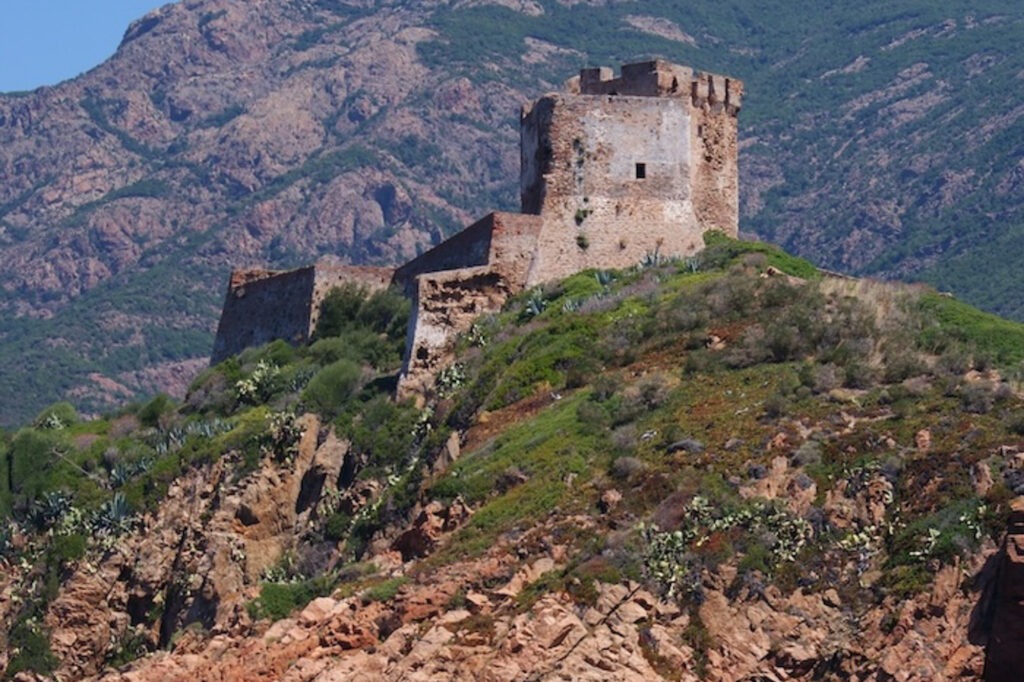
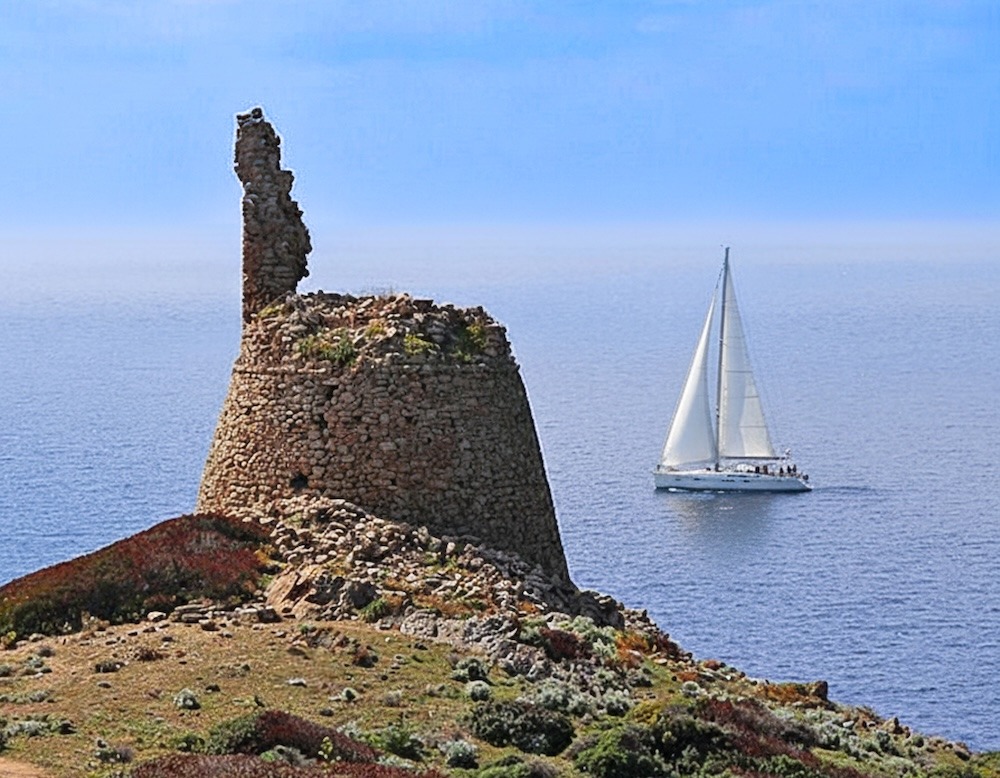
The coast north of Cargèse quickly turns dramatic. Low headlands give way to steeper red cliffs and more serious looking hills inland. You’ll likely spend much of this leg reaching or running along the coast, with the boat feeling nicely in her groove. Girolata appears slowly as you round the headland: a horseshoe bay with cliffs on either side, the Genoese tower on its knoll and a scatter of buildings in the fold of the valley. Mooring buoys and small docks sit in the centre of the bay, leaving clear water around the edges. The whole place feels tucked away. There are no roads in, only a mule track and the sea, so even with day-trip boats visiting it keeps a relaxed, slightly timeless atmosphere. In the evening, once the excursion boats leave, the sound shifts to clinking glasses ashore and the occasional cow wandering the beach, unconcerned by visiting yachts.
16 nautical miles
3 hrs sailing time
LUNCH STOP:none planned
MOORING:Seasonal mooring field with buoys, plus small port offering water, power, showers and limited fuel; book ahead in season.
Description
The coast north of Cargèse quickly turns dramatic. Low headlands give way to steeper red cliffs and more serious looking hills inland. You’ll likely spend much of this leg reaching or running along the coast, with the boat feeling nicely in her groove. Girolata appears slowly as you round the headland: a horseshoe bay with cliffs on either side, the Genoese tower on its knoll and a scatter of buildings in the fold of the valley. Mooring buoys and small docks sit in the centre of the bay, leaving clear water around the edges. The whole place feels tucked away. There are no roads in, only a mule track and the sea, so even with day-trip boats visiting it keeps a relaxed, slightly timeless atmosphere. In the evening, once the excursion boats leave, the sound shifts to clinking glasses ashore and the occasional cow wandering the beach, unconcerned by visiting yachts.
Attractions
Girolata works best if you treat it as a slow-down stop. Once on a buoy or picked up by the local boat service, you can wander the short waterfront, choose between simple restaurants and find the small grocery for fresh bread and essentials. A popular walk leads up to the Genoese tower above the bay, giving wide views over Scandola and the open sea. Swimming and paddleboarding around the moorings are easy in settled conditions, though you’ll share the water with the excursion boats during the day. If the crew fancy a change of pace, local operators offer small-boat trips deeper into the Scandola reserve with commentary on geology and wildlife. One afternoon here I was out in the dinghy trying to take a “perfect” photo of the boat under the cliffs. The result was mostly my thumb and a very patient crew waiting for me to stop faffing about and come back for aperitif.
Cautions
Busy with excursion boats; respect speed limits, buoyage and Scandola reserve rules when arriving or leaving the gulf.
Facilities
Water, electricity, some fuel, showers, small grocery and several restaurants in Girolata; no formal medical services.
Day 3 – Girolata to Calvi
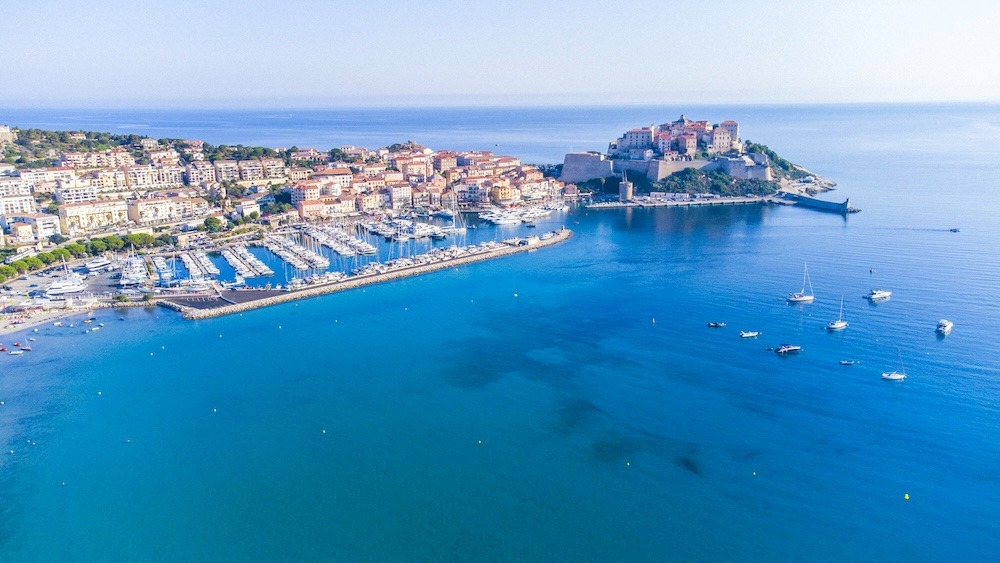
Leaving Girolata you work your way along one of the prettiest stretches of the route, with Scandola’s cliffs off to starboard and the mainland mountains behind. In settled weather the sea can look oily-calm against the rock; in a blow it quickly reminds you that this is an open coast. As you close Calvi, the skyline is dominated by the citadel perched above the harbour and long curve of beach sweeping east. The marina lies under the citadel walls, with fishing boats, yachts and a steady trickle of ferries and trip boats. Compared to Girolata, Calvi feels like a small town again: more lights, more people, and a busier waterfront. It’s a natural mid-week stop on a North Corsica sailing itinerary, giving the crew a chance to stretch their legs, replenish supplies and enjoy a bit of nightlife before quieter anchorages later in the week.
24 nautical miles
5hrs sailing time
LUNCH STOP:quiet bay on route
MOORING:Calvi marina offers water, power, fuel, showers, repairs; high-season berths should be reserved, with rates varying by length.
Description
Leaving Girolata you work your way along one of the prettiest stretches of the route, with Scandola’s cliffs off to starboard and the mainland mountains behind. In settled weather the sea can look oily-calm against the rock; in a blow it quickly reminds you that this is an open coast. As you close Calvi, the skyline is dominated by the citadel perched above the harbour and long curve of beach sweeping east. The marina lies under the citadel walls, with fishing boats, yachts and a steady trickle of ferries and trip boats. Compared to Girolata, Calvi feels like a small town again: more lights, more people, and a busier waterfront. It’s a natural mid-week stop on a North Corsica sailing itinerary, giving the crew a chance to stretch their legs, replenish supplies and enjoy a bit of nightlife before quieter anchorages later in the week.
Attractions
Calvi’s citadel is the obvious starting point, with narrow lanes, stone houses and viewpoints back over the bay and surrounding mountains. Below, the marina and seafront give you cafés, gelato stands and plenty of people-watching. The main beach is long and gently shelving, ideal for families. Watersports rentals line the shore, so you can mix sailing with paddleboarding or a short jetski session if you like that sort of thing. A fun non-sailing excursion is the little coastal train that rattles along the shore to Algajola and L’Île-Rousse, with good swimming stops and a morning food market at L’Île-Rousse. In the evening, restaurants range from simple pizzerias to smarter dining with citadel views. On one visit I tried to impress the crew by ordering in my best French; the waiter politely switched to perfect English after my first mangled sentence and saved us all a lot of effort.
Cautions
No anchoring in parts of the bay during summer; watch for ferry traffic and gusts off the hills.
Facilities
Full marina services, supermarkets, chandleries, many restaurants and bars; medical centre and pharmacies available in town.
Day 4 – Calvi to Scandola
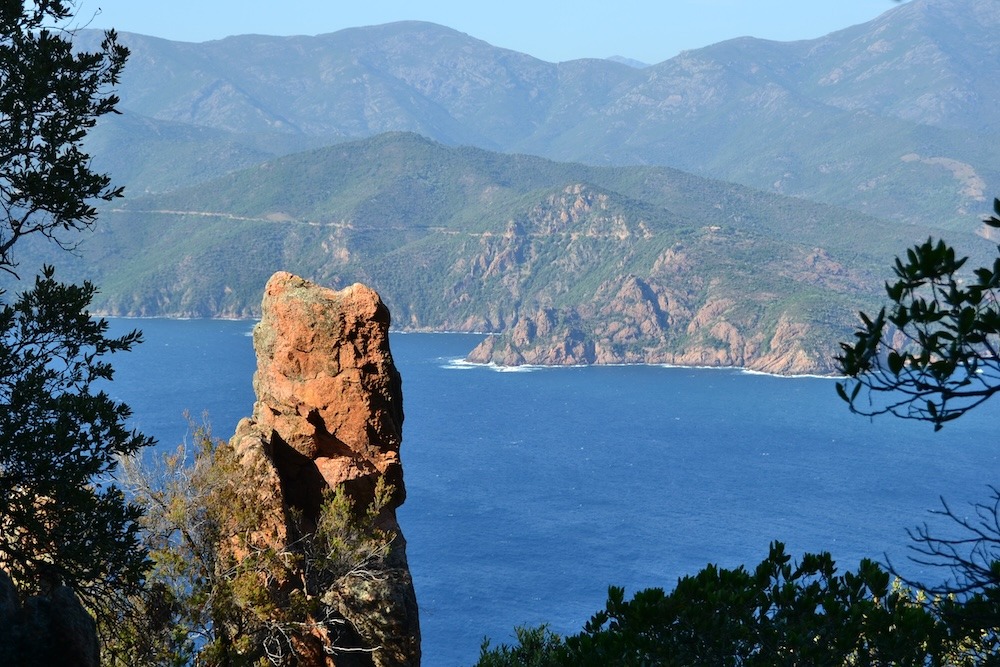
The run from Calvi toward Scandola feels like sailing into a natural amphitheatre of red volcanic cliffs and deep blue water. The land rises sharply on both sides, and the shapes get more dramatic as you close the reserve, with towers, pinnacles and long slabs of rock dropping straight into the sea. Colours shift through the day, from copper and orange in the morning to deep crimson as the sun dips. The atmosphere changes too. Once you leave the main traffic near Calvi, the coastline becomes quieter and more rugged, with an almost untouched feel. The water clarity is striking, and the cliffs echo faintly with bird calls carried on the breeze. Even in settled conditions you feel the boat respond differently here — the air seems stiller and the scenery pulls everyone’s attention forward. It’s the part of the trip where the crew usually fall silent for a few minutes, just taking in the scale of the place.
15 nautical miles
3hrs 30mins sailing time
LUNCH STOP:none planned
MOORING:Anchoring overnight inside Scandola is allowed as long as you follow the protected-zone rules: use any installed mooring buoys first, keep your anchor set on sand or mud only, and avoid all seagrass meadows.
Description
The run from Calvi toward Scandola feels like sailing into a natural amphitheatre of red volcanic cliffs and deep blue water. The land rises sharply on both sides, and the shapes get more dramatic as you close the reserve, with towers, pinnacles and long slabs of rock dropping straight into the sea. Colours shift through the day, from copper and orange in the morning to deep crimson as the sun dips. The atmosphere changes too. Once you leave the main traffic near Calvi, the coastline becomes quieter and more rugged, with an almost untouched feel. The water clarity is striking, and the cliffs echo faintly with bird calls carried on the breeze. Even in settled conditions you feel the boat respond differently here — the air seems stiller and the scenery pulls everyone’s attention forward. It’s the part of the loop where the crew usually fall silent for a few minutes, just taking in the scale of the place.
Attractions
Scandola rewards slow exploration. The rock formations are the main draw: narrow inlets, high arches, caves and clefts that catch the light at different angles. A gentle circuit by yacht or dinghy lets you see the changes in colour and the way the cliffs drop straight into deep water. Wildlife is common here, especially seabirds, which adds to the sense of being in a protected corner of the island. Snorkelling is a highlight when visibility is good, with plenty of fish and bright patches of seabed. The coves around the outer edges of the reserve often offer calmer water for a swim, and the backdrop makes even a quick dip feel memorable. If the swell builds, staying just outside the more enclosed corners still gives impressive views without too much motion.
Cautions
Avoid protected zones and follow reserve rules; monitor swell, especially when approaching narrow coves.
Facilities
No services in the reserve; stock water, food and power beforehand in Calvi or Girolata.
Day 5 – Scandola to Palo (Cala di Palu / Piana)
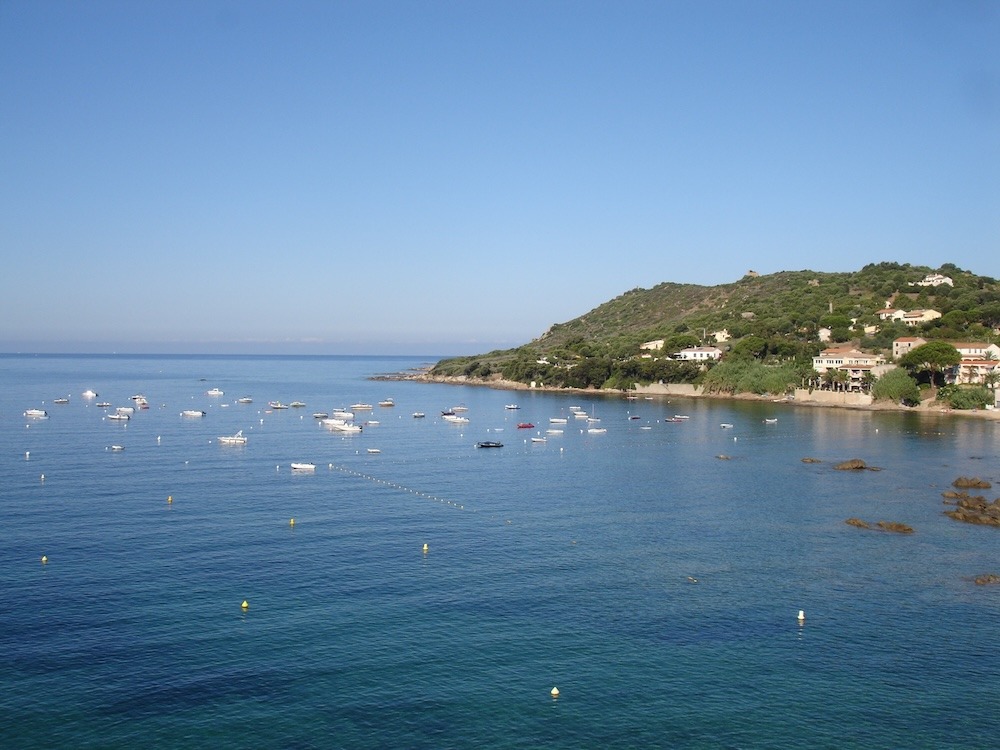
From the southern edge of Scandola you round Capo Rosso and enter another playground of cliffs and inlets around Piana. Cala di Palu sits among these calanques, with high red rock on both sides and small shingle or rocky beaches at the head of the bay. The anchorage feels dramatic rather than polished. You’ll likely share it with a mix of cruising yachts and excursion boats, though evenings are quieter once most day-trippers head home. The water is usually clear enough to see your chain lying on sand between darker rock or weed patches. Looking inland you can see the plateau and, further away, the white houses of Piana clinging to the hillside. It’s easy to sit in the cockpit here watching the colours change from bright orange in late afternoon to soft purple as the sun drops behind the headland—one of the signature views of North Corsica sailing.
10 nautical miles
2hrs sailing time
LUNCH STOP:none planned
MOORING:Anchorage on sand in Cala di Palu; no services afloat, check Navily and local guides for latest restrictions.
Description
From the southern edge of Scandola you round Capo Rosso and enter another playground of cliffs and inlets around Piana. Cala di Palu sits among these calanques, with high red rock on both sides and small shingle or rocky beaches at the head of the bay. The anchorage feels dramatic rather than polished. You’ll likely share it with a mix of cruising yachts and excursion boats, though evenings are quieter once most day-trippers head home. The water is usually clear enough to see your chain lying on sand between darker rock or weed patches. Looking inland you can see the plateau and, further away, the white houses of Piana clinging to the hillside. It’s easy to sit in the cockpit here watching the colours change from bright orange in late afternoon to soft purple as the sun drops behind the headland—one of the signature views of North Corsica sailing.
Attractions
Cala di Palu itself is mainly about swimming, snorkelling and exploring by dinghy between little coves and rock formations. With care and calm conditions, you can nose the tender into small grottoes and arches, always keeping an eye on swell. Ashore, the village of Piana is a short taxi ride away and worth visiting for its views over the Gulf of Porto, small square and range of restaurants. The Castellani grocery-restaurant is an example of the mix you find here: part deli, part kitchen, serving local specialities. Several walking trails start from the road above the calanques, giving spectacular vantage points back toward your anchorage. I once promised the crew “just a short walk” with a cheeky smile, not revealing the gradient until too late; the views were worth it. But don’t wear your deck shoes on steep Corsican footpaths, grab something more forgiving.
Cautions
Open to swell in strong westerlies; mind rocks and shoals near Capo Rosso, rely on up-to-date charts.
Facilities
No water or fuel at anchor; groceries and restaurants available in nearby Piana, larger supermarkets back in Cargèse.
Day 6 – Palo to Figuera
South from Cala di Palu the coastline slowly softens, but you still sail past plenty of rock and headlands before reaching the outer arms of the Ajaccio gulf. The sea here often has an easy rhythm under normal summer breezes, though anything with west in it can raise a bit of swell on the more exposed stretches. Anse de la Figuera lies just outside the main bay, sheltered by an islet and steep hillsides. At anchor you look back toward Ajaccio’s hills one way and, the other, toward more open water and distant Sanguinaires. The anchorage is simple: just your boat, a few neighbours and a rocky shore with very little development. Water clarity is usually excellent, so it’s easy to check your set and enjoy one last lazy afternoon swimming off the stern before returning to base tomorrow. This is often the point in a North Corsica sailing week when people start discussing how to squeeze in “just one more day”.
18 nautical miles
3hrs 30mins sailing time
LUNCH STOP:none planned
MOORING:Anchor in 4–7 m behind the islet on sand and weed; no services, consult recent guides for restrictions.
Description
South from Cala di Palu the coastline slowly softens, but you still sail past plenty of rock and headlands before reaching the outer arms of the Ajaccio gulf. The sea here often has an easy rhythm under normal summer breezes, though anything with west in it can raise a bit of swell on the more exposed stretches. Anse de la Figuera lies just outside the main bay, sheltered by an islet and steep hillsides. At anchor you look back toward Ajaccio’s hills one way and, the other, toward more open water and distant Sanguinaires. The anchorage is simple: just your boat, a few neighbours and a rocky shore with very little development. Water clarity is usually excellent, so it’s easy to check your set and enjoy one last lazy afternoon swimming off the stern before returning to base tomorrow. This is often the point in a North Corsica sailing week when people start discussing how to squeeze in “just one more day”.
Attractions
Life at Figuera is boat-centred. Swim, snorkel and explore the rocks by dinghy; the mix of sand and weed and the small islet make for a good underwater playground. It’s also a fine spot simply to read in the cockpit and watch the light change on the hills. If you want more movement, a longer dinghy ride or short coastal hop by yacht takes you into the Ajaccio bay with its beaches and beach bars. Some crews like to head in earlier, anchor closer to town for a last dinner ashore and then move to the marina next morning. On a previous trip I confidently jumped in to check the anchor, only to discover I’d underestimated the water temperature. The crew still tease me for the very fast climb back up the transom steps and sudden interest in making hot tea.
Cautions
Do not pass between islet and coast; reef blocks the channel. Exposed in strong southerly or easterly swell.
Facilities
No shore facilities in Figuera; full services, fuel, groceries and medical support are back in Ajaccio bay.
Day 7 – Figuera to Ajaccio
The final leg is a relaxed run or reach into Ajaccio bay, depending on wind. You skirt the outer headlands and gradually pick up more traffic—local boats, ferries and perhaps another charter fleet starting their own week. As you close the city, the Sanguinaires group and Parata peninsula lie off to one side, while the old town, citadel and marina sit ahead. It’s worth timing your arrival so you have a little spare fuel and patience: summer afternoons can be busy around the harbour entrance and fuel dock. Back on the pontoon, there’s a nice feeling of completion seeing your track looped on the plotter: a small but varied slice of North Corsica sailing, from city to cliffs and back again. The only real job left is the familiar one—sorting laundry, cleaning decks and quietly planning where you’d go next time.
14 nautical miles
3hrs sailing time
LUNCH STOP:none planned
MOORING:Return berth at Port Tino Rossi or Port Charles Ornano; both offer water, power, fuel and shore services.
Description
The final leg is a relaxed run or reach into Ajaccio bay, depending on wind. You skirt the outer headlands and gradually pick up more traffic—local boats, ferries and perhaps another charter fleet starting their own week. As you close the city, the Sanguinaires group and Parata peninsula lie off to one side, while the old town, citadel and marina sit ahead. It’s worth timing your arrival so you have a little spare fuel and patience: summer afternoons can be busy around the harbour entrance and fuel dock. Back on the pontoon, there’s a nice feeling of completion seeing your track looped on the plotter: a small but varied slice of North Corsica sailing, from city to cliffs and back again. The only real job left is the familiar one—sorting laundry, cleaning decks and quietly planning where you’d go next time.
Attractions
Once the boat is secure and checked in, Ajaccio gives you plenty to fill the last afternoon or evening. The old town streets around the citadel are full of cafés, small shops and Napoleon-themed history, including his childhood home. If time allows before flights, local beaches around the bay are easy to reach, and there are coastal walks with viewpoints back over the harbour. Food-wise, you can go from simple quayside brasseries to more ambitious Corsican menus using local charcuterie, cheeses and wines. For anyone catching late flights, a final stroll along the waterfront, looking back at your charter yacht among the others, tends to seal the memories. It’s also the moment when somebody usually says, “Next time we’ll go a bit further north,” which is how many North Corsica sailing habits begin.
Cautions
Busy traffic and ferry wash near harbour entrance; follow port instructions and fuel-dock procedures, especially in high season.
Facilities
Ajaccio marinas provide full services: water, electricity, fuel, Wi-Fi, supermarkets, restaurants, medical care and pharmacies.
Facilities Summary
Stop
Water
Fuel
Power
Groceries
Restaurants
Medical/Pharmacy
Ajaccio
✅
✅
✅
Large
Many
Full services
Cargèse
✅
✅
✅
Small
Several
Basic pharmacy nearby
Girolata
✅
Limited
✅
Very small
Several
None on site
Calvi
✅
✅
✅
Medium
Many
Clinic, pharmacies
Palo
⚪
⚪
⚪
Limited in Piana
Several in Piana
Basic services in Piana
Figuera
⚪
⚪
⚪
⚪
⚪
⚪
Ajaccio (return)
✅
✅
✅
Large
Many
Full services
Consider the Reverse Route
For a full island circuit, many skippers choose an anti-clockwise route to keep the prevailing north-westerlies more often aft. On this compact North Corsica sailing loop, however, you can happily run it in the direction described here without fighting the weather every day. Distances are short enough that an afternoon sea breeze or brief Mistral pulse is manageable, provided you watch forecasts and keep options open. This itinerary is designed to reach the more exposed Scandola and Piana cliffs by mid-week, when the crew are settled into the boat and local practices. If a strong westerly window appears, you can shuffle the order slightly, spending more time in sheltered harbours like Ajaccio or Calvi until conditions ease. Running in the opposite order is also possible but would bring the longer Calvi–Palo leg earlier, before everyone has adjusted to the motion. For most charter crews I’d keep the current plan, treat the forecast as a guide rather than a challenge, and remember that there’s no shame in spending an extra night somewhere comfortable if the Mistral decides to show off.
Support Aids
Whether chartering or welcoming friends onboard your own yacht, these FREE KiwiSailor aids will come in handy and help ease your preparations ….meaning the first drink on this journey is so much more enjoyable:
There are so many variables to consider when planning an itinerary and estimating sailing times and distances, so one needs to appreciate that these are an estimate only.
Read MoreLess
Planned Stopping Locations
As they say, you always plan to ‘sail toward’ and not ‘sail to’, as something unplanned could happen. So one should also consider a ‘bolt-hole’ (a sheltered location where a you can find refuge from bad weather for example). I have not planned for these as there are naturally many variables and options to allow for. So look ahead in the plan and always keep an eye on the weather.
Sailing Distance
I use a planning method that adds a safety margin and thus produces a distance, which tends to be 10–20% longer than charted straight-line or optimised-tool calculations. Assuming:
clearing headlands
tacking angles in light wind
staying outside rocky headlands/fringes
not hugging the coastline
Sailing Time
Sailing time is obviously a function of distance and speed, and again speed can vary considerably. My approach here assumes:
round to the nearest 30 mins
relatively clean hull
a cruising speed of 6 knots, which provides small allowances for:
leaving and entering harbours (but ignore berthing or for example anchoring drop/retrieval time)
trimming sails
occasional lulls
motor sailing if wind is too light to maintain 6 knots
Ultimately my approach is to allow for “steady” sailing as you would normally on vacation, rather than sporty Saturday racing at the local club.
To provide the best experiences, we use technologies like cookies to store and/or access device information. By clicking Accept you are consenting to these technologies and this will allow us to process data such as browsing behaviour or unique IDs on this site. By clicking the close button ‘X’ you will not be consenting, which may adversely affect certain features and functions.
Functional
Always active
The technical storage or access is strictly necessary for the legitimate purpose of enabling the use of a specific service explicitly requested by the subscriber or user, or for the sole purpose of carrying out the transmission of a communication over an electronic communications network.
Preferences
The technical storage or access is necessary for the legitimate purpose of storing preferences that are not requested by the subscriber or user.
Statistics
The technical storage or access that is used exclusively for statistical purposes.The technical storage or access that is used exclusively for anonymous statistical purposes. Without a subpoena, voluntary compliance on the part of your Internet Service Provider, or additional records from a third party, information stored or retrieved for this purpose alone cannot usually be used to identify you.
Marketing
The technical storage or access is required to create user profiles to send advertising, or to track the user on a website or across several websites for similar marketing purposes.