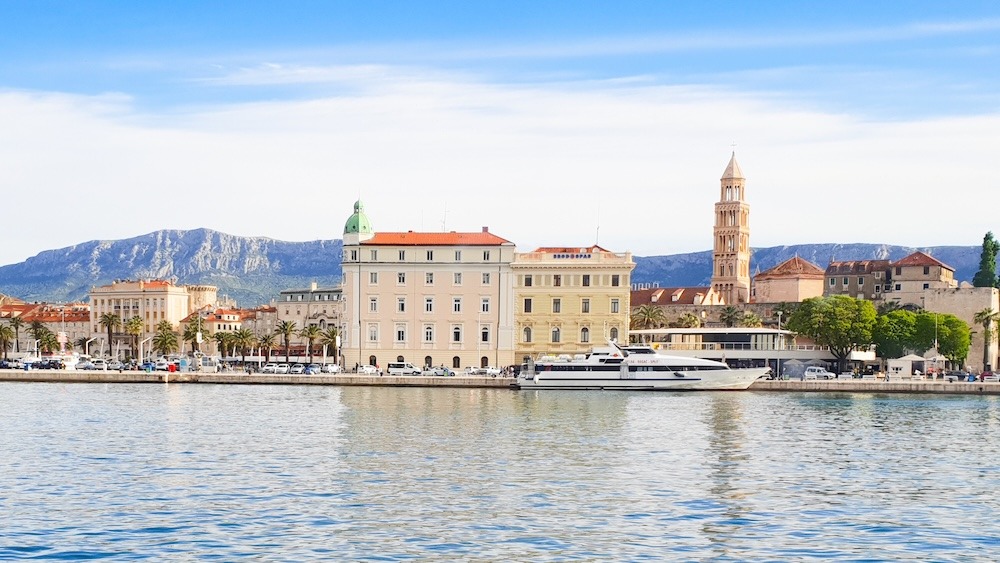
Central Dalmatia – Split to Korčula
Central Dalmatia
Sail a seven-day Central Croatia sailing loop through Central Dalmatia’s classics: medieval harbours, vineyard-backed bays, and village konobas. Distances stay comfortable, with one or two longer passages broken by swim stops, giving time to explore fortresses, blue coves, and slow-lane island life ashore each day.
7 days
149 nautical miles
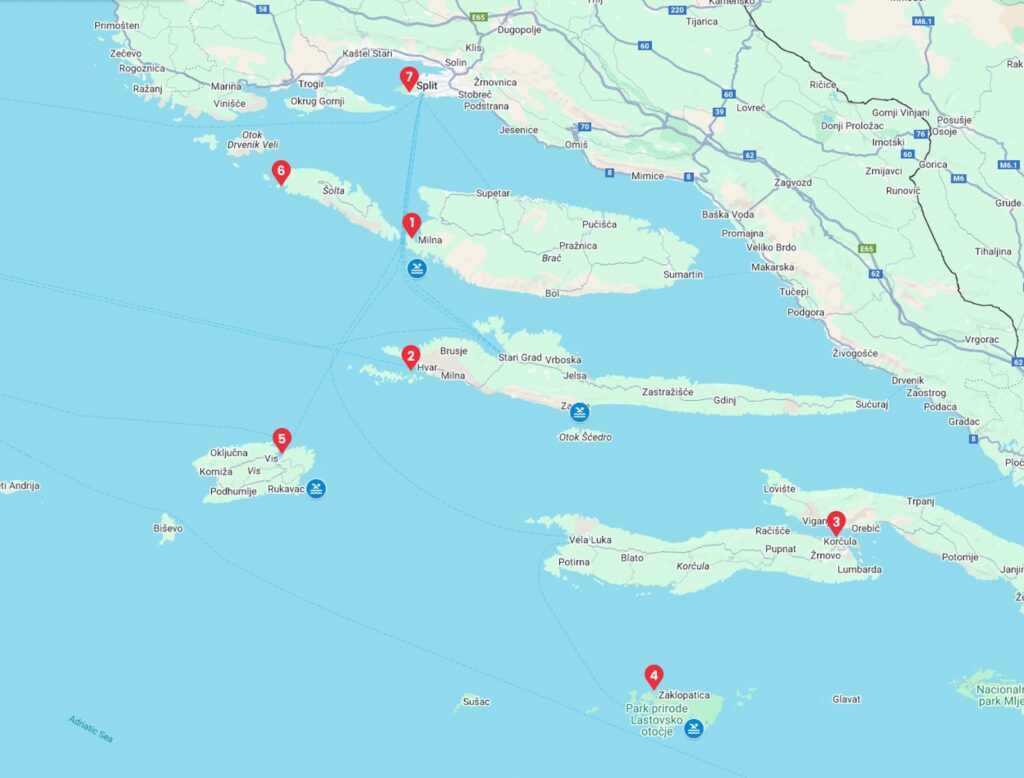
Split ➔ Milna (Brač) ➔ Hvar (Hvar Island) ➔ Korčula (Korčula Island) ➔ Lasoto (Lastovo) ➔ Vis (Vis Island) ➔ Maslinica (Šolta) ➔ Split
Highlights
A relaxed island-hopping Croatia sailing itinerary from Split, skimming Hvar, Korčula, Vis and Šolta’s quiet Maslinica.
Overview
Central Dalmatia is where Croatia somehow squeezes Roman palaces, Venetian bell towers, pine-fringed bays and easy day-sails into one compact playground. Split is your perfect springboard: a busy ferry hub wrapped around Diocletian’s Palace, with provisioning, repairs, and late flights all on your side. From here our Croatia sailing itinerary runs a neat circular loop through Brač, Hvar, Korčula, Lastovo, Vis and Šolta, before slipping back to Split’s waterfront cafés. The charm of this route is balance. You get glamorous Hvar town and the medieval walled city of Korčula Town alongside quieter harbours like Milna and Maslinica, plus a proper blue-water feel on the open legs to Lasoto (Lastovo) and Vis. Typical summer days see a gentle land breeze in the morning, then the afternoon maestral filling in – ideal “learning” conditions. It’s Central Croatia Sailing at its best: enough variety to keep experienced skippers smiling, yet short hops that keep newer crews relaxed, fed, and in the water often.
Special Gems
If you’ve time or wind in your favour, sprinkle in a few extras around this Central Dalmatia route. From Brač, a side trip by taxi or RIB towards Zlatni Rat beach gives you the classic spit of white pebbles and windsurf sails on the horizon. On Hvar, early risers can hike further beyond the fortress into lavender-scented hills, or book a low-key jeep tour across the island’s interior villages. Korčula and Vis both offer excellent wine-tasting – look for small family wineries rather than big tours. Korčula Town is also famous for the Moreška, a traditional sword dance and whilst its annual performance is on St Theodore’s Day (July 29) you can experience it every Monday and Thursday evening between May and September at the open-air cinema adjacent Land Gate. Snorkellers shouldn’t neglect a mask and fins: Šćedro, southern Korčula and around Vis all feature in local “best of” lists for underwater exploring. Festival fans will find something most weeks in summer, from Hvar’s music events to local fishermen’s nights and the Split Summer Festival back on the mainland. If you’re sailing with kids or newer crew, these small onshore adventures keep the balance right between time on the helm and time simply being on holiday. Despite modern skepticism, Croatia has a rich history of vampire folklore, famously illustrated by a 1737 outbreak of vampire mania on the island of Lastovo, where officials from Dubrovnik had to intervene to stop villagers from digging up suspected undead. These fears centered on the vukodlak—a devil-filled corpse blamed for community misfortunes—which locals believed could only be neutralized by severing the hamstrings of the deceased to prevent them from roaming. Lastovo island is dotted with interesting relics and ruins from various periods. In the bay of Jurjeva, (west of the quay in Veli Lago) you can visit the various submarine/boat tunnels. Moor up near the entrance. Vis Island also has a prominent submarine tunnel, located near Vis town in Parja Bay on the north side. You can’t miss the massive rock-carved tunnel, designed to hide submarines from enemy surveillance. You can motor into the bay and anchor quite close, but it can get busy.
Day 1 – Split to Milna (Brač)
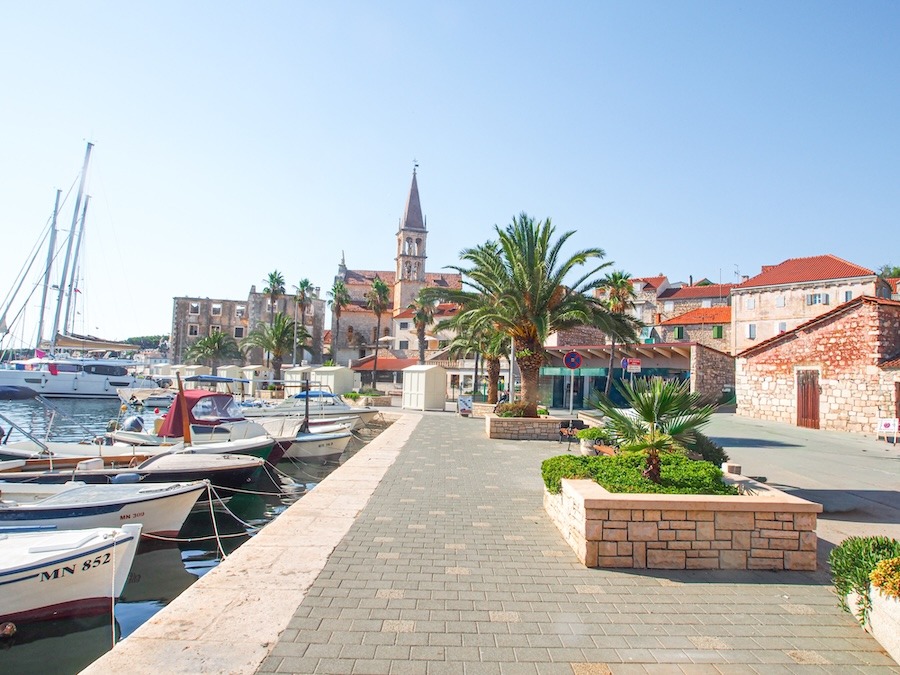
Split’s Riva is a surprisingly easy place to start: wide harbour, good fuel dock, and charter bases used to turning crews around quickly. Once clear of the ferries, you point across the channel to Brač, watching the city and mountains slide astern. Milna sits on the NW corner of Brač, a long protected inlet with stone houses lining the shore and two well-equipped marinas tucked inside. The approach is straightforward in settled weather, with clear leading marks and plenty of depth if you stick to the main entrance. It feels like a gentle first taste of Central Croatia Sailing rather than a test, giving crew time to find their sea legs.
11 nautical miles
2hrs sailing time
LUNCH STOP:none planned
MOORING:Two marinas plus town quay; reserve in high season via charter base or marina apps.
Description
Split’s Riva is a surprisingly easy place to start: wide harbour, good fuel dock, and charter bases used to turning crews around quickly. Once clear of the ferries, you point across the channel to Brač, watching the city and mountains slide astern. Milna sits on the NW corner of Brač, a long protected inlet with stone houses lining the shore and two well-equipped marinas tucked inside. The approach is straightforward in settled weather, with clear leading marks and plenty of depth if you stick to the main entrance. It feels like a gentle first taste of Central Croatia Sailing rather than a test, giving crew time to find their sea legs.
Attractions
Once tied up, wander Milna’s waterfront, where old shipbuilders’ houses now host cafés and konobas. The Baroque church and bell tower are worth a short stroll, especially in evening light. If you’ve still got energy, stretch your legs on the path towards Lučice or Osibova bays, or book a quick taxi to a nearby viewpoint. For dinner, look for simple grilled fish, local olive oil and a carafe of island red – Brač is proud of its produce. This first night sets the tone: unhurried, walkable, and close to the boat.
Cautions
Watch fast catamarans out of Split, and afternoon crosswinds in the Brač channel when manoeuvring.
Facilities
Water, fuel, shore power, groceries, bakeries, restaurants and basic medical all available; normal marina tariffs apply.
Day 2 – Milna to Hvar Town (Hvar)
Leaving Milna, you curve south-east across open water towards Hvar, with the long ridge of the island rising ahead. This is classic postcard Central Dalmatia: blue water, distant ferries, and a steady breeze on the beam. Hvar Town sits on the SW shore, backed by terraced hills and overlooked by a fortress. Approaching from the NW, you’ll first see the Pakleni Islands to port, then the harbour opening with its protective breakwater and constant ballet of yachts, ferries and trip boats. Berthing can be intense in high season, so many skippers opt for nearby Pakleni anchorages or a buoy field, then hop ashore by taxi boat for the evening.
14 nautical miles
3hrs sailing time
LUNCH STOP:none planned
MOORING:Town quay with lazy lines, nearby marina, and mooring buoys; book ahead July–August.
Description
Leaving Milna, you curve south-east across open water towards Hvar, with the long ridge of the island rising ahead. This is classic postcard Central Dalmatia: blue water, distant ferries, and a steady breeze on the beam. Hvar Town sits on the SW shore, backed by terraced hills and overlooked by a fortress. Approaching from the NW, you’ll first see the Pakleni Islands to port, then the harbour opening with its protective breakwater and constant ballet of yachts, ferries and trip boats. Berthing can be intense in high season, so many skippers opt for nearby Pakleni anchorages or a buoy field, then hop ashore by taxi boat for the evening.
Attractions
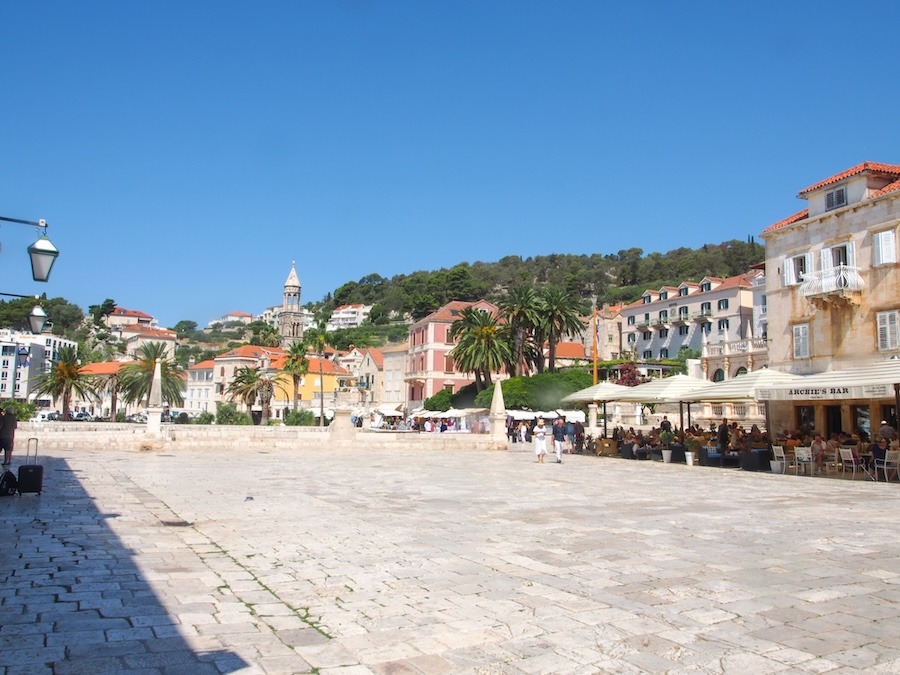
Hvar Town combines history and nightlife in one tight harbour. Spend the afternoon exploring the main square and Cathedral of St Stephen, then hike up to the Fortica fortress for a wide-angle view over the harbour and Pakleni Islands. Down at water level, cafés and wine bars spill onto the promenade. You can book a late-afternoon taxi boat to the Pakleni Islands for a swim at a quieter beach, or simply enjoy people-watching from a shaded terrace. In the evening, tuck into seafood at a back-street konoba or sample Hvar’s wine bars; just remember you’re still sailing tomorrow.
Cautions
Harbour can be rolly with traffic; strong gusts funnel off the hills. Rig fenders generously.
Facilities
Full-service port: water, fuel, power, supermarkets, pharmacies, medical clinic, plentiful bars and restaurants.
Day 3 – Hvar to Korčula
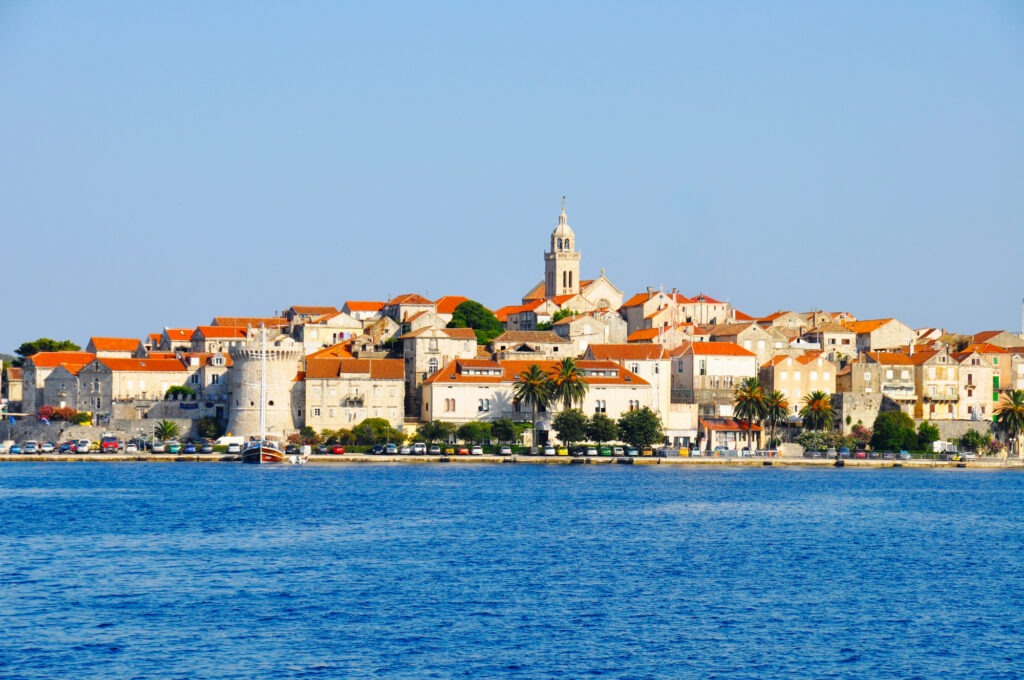
This is the first “biggish” day of your Croatia sailing itinerary, but splitting it at Šćedro keeps things civilised. You leave Hvar Town on a SE heading, slipping along the south coast before turning towards the low, green outline of Šćedro; a small island lying two miles S of Hvar Island. Šćedro used to host a Dominican monastery for over 300 years, but the monks departed in the 18th century and today the only inhabitants are a few holidaymakers and the staff of the restaurants. Its north-side coves offer good shelter in settled weather and simple restaurant pontoons. After lunch, you pick up again towards Korčula, with the Pelješac peninsula gradually appearing beyond. Entry to Korčula Town is one of the prettiest of Central Croatia Sailing: stone towers, terracotta roofs and a neat walled headland pushing into the channel. Approach calmly, as water taxis and ferries buzz about like slightly over-caffeinated dinghies.
32 nautical miles
5hrs 30mins sailing time
LUNCH STOP:Šćedro, 2 Nm south of Hvar Island
MOORING:ACI Marina Korčula or town quay stern-to; reserve in high season, prices mid-range for Adriatic island marinas. An alternative and our favourite, is the anchorage in Uvala Luka bay – just southeast of town the town. It has calmer surrounding and short water taxi ride to the old town.
Description
This is the first “biggish” day of your Croatia sailing itinerary, but splitting it at Šćedro keeps things civilised. You leave Hvar Town on a SE heading, slipping along the south coast before turning towards the low, green outline of Šćedro; a small island lying two miles S of Hvar Island. Šćedro used to host a Dominican monastery for over 300 years, but the monks departed in the 18th century and today the only inhabitants are a few holidaymakers and the staff of the restaurants. Its north-side coves offer good shelter in settled weather and simple restaurant pontoons. After lunch, you pick up again towards Korčula, with the Pelješac peninsula gradually appearing beyond. Entry to Korčula Town is one of the prettiest of Central Croatia Sailing: stone towers, terracotta roofs and a neat walled headland pushing into the channel. Approach calmly, as water taxis and ferries buzz about like slightly over-caffeinated dinghies.
Attractions
In Korčula Town, you step into a mini-Dubrovnik without the same crowds. Wander the radial street plan, peek into small churches, and climb the town walls for views back towards Lastovo. You can visit the ‘marketed’ birthplace of thirteenth-century explorer Marco Polo and St. Mark’s Cathedral which houses ‘Pieta’ by Ivan Meštrović and Jesus Christ the Redeemer by Frano Kršinić. Don’t miss sampling some of the traditional Korčula cakes cukarini and klašuni to name a couple, the special rose-petal flavoured ‘rozata’ (cream caramel), the bread ‘lumblija’ or lamb baked under a peka.
Cautions
Channel currents and crosswinds can complicate town quay berthing; keep a listening watch for ferries.
Facilities
Water, power, fuel dock (to the E of Uvala Luka bay at the car ferry dock), supermarkets, bakeries, fish market, pharmacies, medical centre, wide restaurant choice.
Day 4 – Korčula to Mali Lago and Veli Lago (Lastovo)
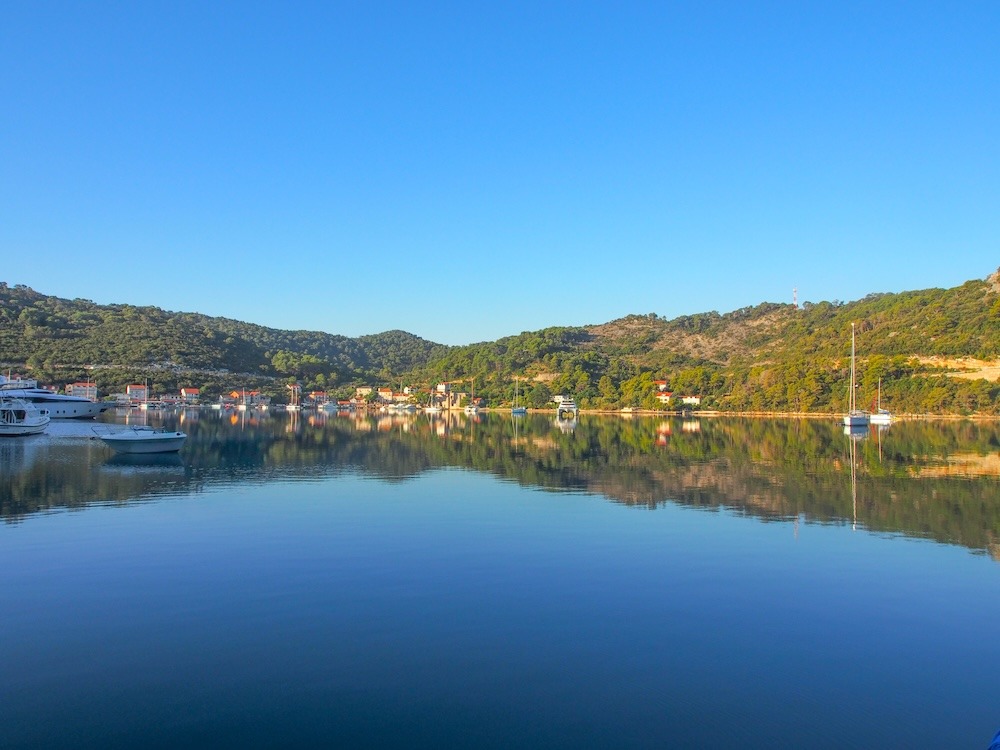
Leaving Korčula, you feel the coastline fall away a little as you head further offshore towards Lastovo. The island rises dark and forested, a national park feel without too much ceremony. The approach to its main bays twists between headlands and smaller islets, offering sheltered options depending on wind direction. You can choose a mooring in the linked Mali Lago and Veli Lago area, or pick one of the organised coves with restaurant pontoons. The water is typically gin-clear, the hills thick with pines, and at night the stars remind you how far you’ve come from Split’s streetlights. It’s a quieter, slower chapter of your Central Croatia Sailing loop. Worth a consideration is Skrivena Luka, a top snorkelling spot also known as “Hidden Bay” or Portorus, is a naturally sheltered harbor on the southern coast of Lastovo that remains virtually invisible from the open sea. A favorite among sailors, the bay features a busy pontoon with full amenities and the celebrated Porto Rosso restaurant, which serves fresh seafood and homemade wines to visiting crews. The area is also defined by the historic Cape Struga lighthouse, built in 1839, which stands guard at the bay’s entrance and offers unique holiday accommodation.
23 nautical miles
4hrs 30mins sailing time
LUNCH STOP:none planned
MOORING:Park moorings, restaurant buoys and small quays; expect national park or buoy fees plus dinner if using konoba lines. Anchoring in the bay
Description
Leaving Korčula, you feel the coastline fall away a little as you head further offshore towards Lastovo. The island rises dark and forested, a national park feel without too much ceremony. The approach to its main bays twists between headlands and smaller islets, offering sheltered options depending on wind direction. You can choose a mooring in the linked Mali Lago and Veli Lago area, or pick one of the organised coves with restaurant pontoons. The water is typically gin-clear, the hills thick with pines, and at night the stars remind you how far you’ve come from Split’s streetlights. It’s a quieter, slower chapter of your Central Croatia Sailing loop. Worth a consideration is Skrivena Luka, a top snorkelling spot also known as “Hidden Bay” or Portorus, is a naturally sheltered harbor on the southern coast of Lastovo that remains virtually invisible from the open sea. A favorite among sailors, the bay features a busy pontoon with full amenities and the celebrated Porto Rosso restaurant, which serves fresh seafood and homemade wines to visiting crews. The area is also defined by the historic Cape Struga lighthouse, built in 1839, which stands guard at the bay’s entrance and offers unique holiday accommodation.
Attractions
Lasoto is more about nature than ticking sights. Swim straight off the stern, explore by dinghy along rocky inlets, check out a submarine tunnel, snorkel at Skrivena Luka or take a short hike up through the pines for views back towards Korčula and the open Adriatic. In some coves, konobas offer classic peka dishes (slow-baked meat or octopus under an iron bell) if you pre-order in the afternoon. Evening is for stargazing and quiet conversation about vampires; on a still night, you might see phosphorescence flick in your wake. If you have bikes or e-bikes aboard, the interior roads make for a gentle explore through tiny villages and dry-stone terraces.
Cautions
Limited facilities; arrive with full water and provisions. Check park regulations on anchoring and waste.
Facilities
Very basic: a few taverns, limited small shops; no fuel, patchy power and water – treat as semi-wild.
Day 5 – Mali Lago / Veli Lago to Vis Town (Vis)
This is your second longer blue-water leg, crossing from Lasoto to Vis. The open stretch gives a real offshore flavour without losing sight of land for long. Aim to leave after breakfast to ride the building maestral. As Vis grows on the horizon, you can decide between Vis Town’s deep, sheltering bay or swinging a little further for Komiža on the western side. Most crews choose Vis Town for better facilities and ferries, but Komiža has that scruffier fishing-village charm. Either way, the green hills and wide bays feel more remote than the busier Central Dalmatia islands, a reminder of Vis’s years as a restricted military base.
35 nautical miles
6hrs sailing time
LUNCH STOP:Consider lunch/swim stop on south side of Vis
MOORING:Town quays with lazy lines, mooring fields and nearby marina berths; reserve in peak weeks if possible.
Description
This is your second longer blue-water leg, crossing from Lasoto to Vis. The open stretch gives a real offshore flavour without losing sight of land for long. Aim to leave after breakfast to ride the building maestral. As Vis grows on the horizon, you can decide between Vis Town’s deep, sheltering bay or swinging a little further for Komiža on the western side. Most crews choose Vis Town for better facilities and ferries, but Komiža has that scruffier fishing-village charm. Either way, the green hills and wide bays feel more remote than the busier Central Dalmatia islands, a reminder of Vis’s years as a restricted military base.
Attractions
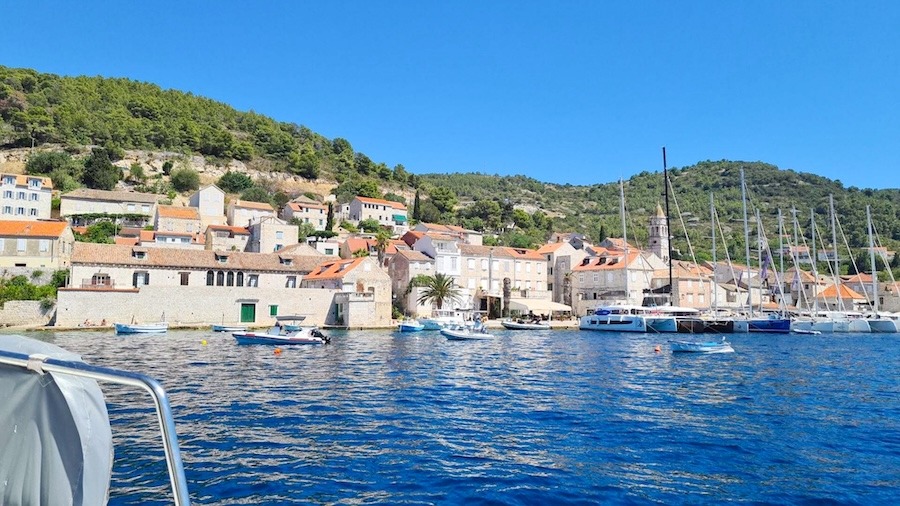
Vis rewards explorers. In Vis Town, stroll the promenade linking Luka and Kut, admiring old stone houses and low-key cafés. The archaeological museum and scattered forts hint at the island’s layered history, from Greeks and Romans to British and Yugoslav forces. From here you can arrange military-history tours to old tunnels and Tito’s cave HQ, or boat trips to the famous Blue Cave on Biševo. Komiža offers pebbly beaches and a friendlier, year-round local vibe; some skippers like to base in one and day-trip to the other. Food-wise, Vis is known for excellent seafood and local wines – a good night to try a slightly longer, shared dinner ashore.
Cautions
Watch ferry movements, and avoid over-exposed southern anchorages if a bora or jugo is forecast.
Facilities
Fuel, water, power, good supermarkets, bakeries, restaurants, bars, pharmacies and medical services all within walking distance.
Day 6 – Vis to Maslinica (Šolta)
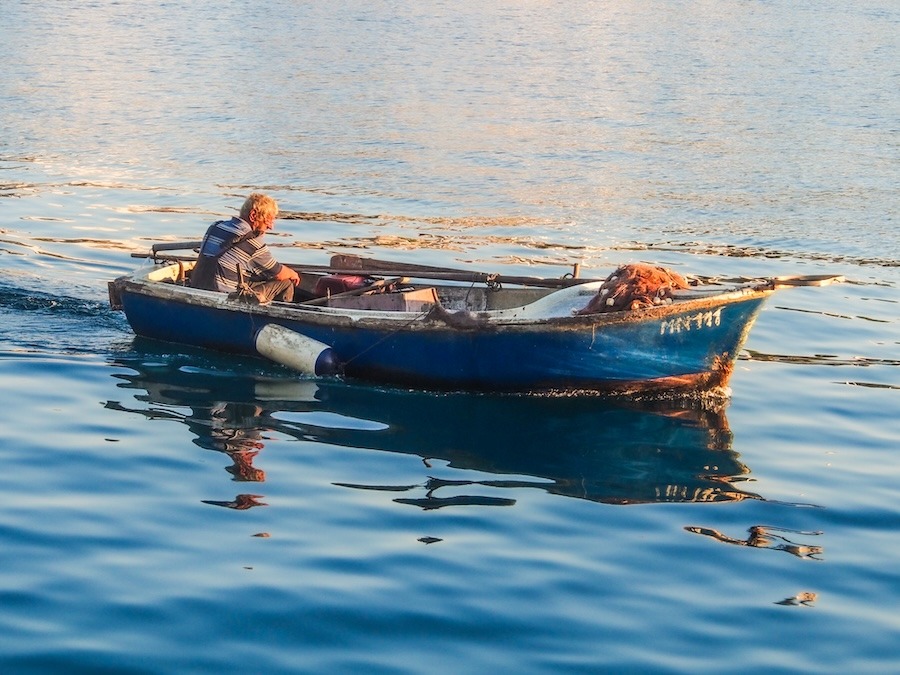
From Vis you angle back towards the main island chain, with Šolta lying between you and the mainland. It’s a satisfying “homeward” leg: a decent sail, yet clearly bringing you towards Split again. Maslinica sits on Šolta’s western tip, a narrow inlet with stone houses on either side and a smart little marina beside the restored Martinis Marchi castle. The surrounding islets form a natural playground, and just over the hill lies Šešula Bay, a deeply indented cove popular as an anchorage. The whole place manages to feel both polished and authentic, with fishing boats still working alongside yachts. Entry is straightforward in normal conditions; keep an eye out for traffic exiting Šešula.
21 nautical miles
4hrs 30mins sailing time
LUNCH STOP:none planned
MOORING:Boutique marina, limited town berths and nearby anchorage at Šešula; book marina early in season.
Description
From Vis you angle back towards the main island chain, with Šolta lying between you and the mainland. It’s a satisfying “homeward” leg: a decent sail, yet clearly bringing you towards Split again. Maslinica sits on Šolta’s western tip, a narrow inlet with stone houses on either side and a smart little marina beside the restored Martinis Marchi castle. The surrounding islets form a natural playground, and just over the hill lies Šešula Bay, a deeply indented cove popular as an anchorage. The whole place manages to feel both polished and authentic, with fishing boats still working alongside yachts. Entry is straightforward in normal conditions; keep an eye out for traffic exiting Šešula.
Attractions
Maslinica is made for a slow final island day. Once tied up, wander to the small beach or follow the path around to Šešula for a late swim among pines and rocky ledges. Back in the village, you can visit the castle hotel’s terrace for a sunset drink, or simply sit on the breakwater watching the sun drop behind the little archipelago. If you have energy, consider a short island walk or bike ride inland towards Grohote to see traditional stone villages and olive groves. For a final konoba dinner afloat, Šolta is also renowned for honey, olive oil and local Dobričić red wine – perfect souvenirs if you’ve any locker space left.
Cautions
Space is tight in peak months; crosswinds and passing wash can make docking a bit lively.
Facilities
Water, power, small shops, a few restaurants and bars; fuel and larger groceries best handled at Vis or Split.
Day 7 – Maslinica to Split
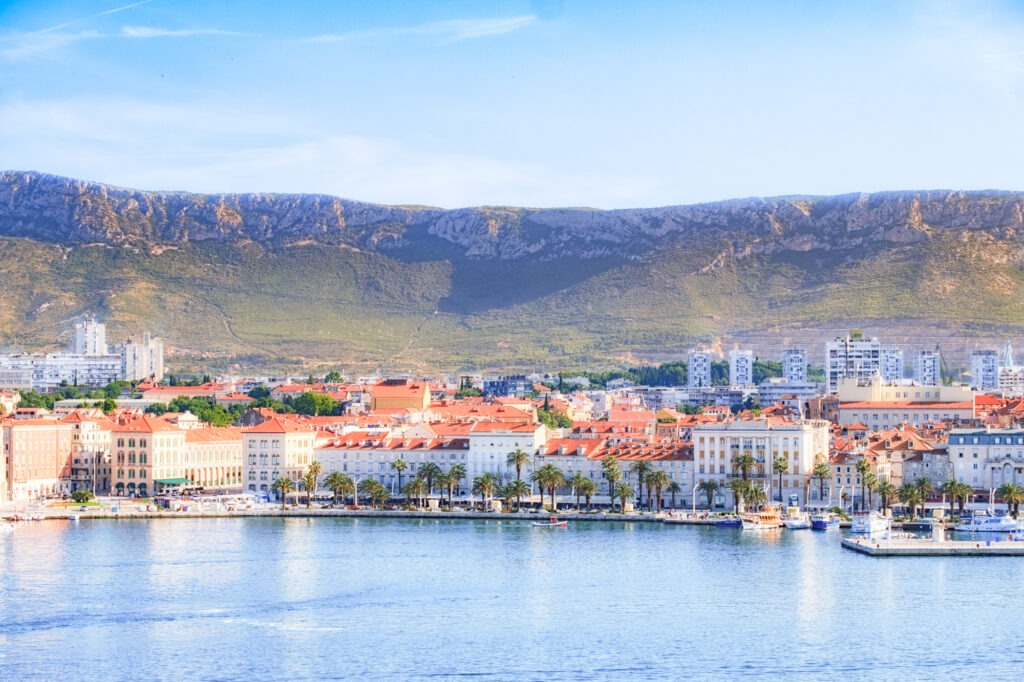
Your final day brings the loop full circle. Leaving Maslinica, you run along Šolta’s north shore or head more directly towards Split, depending on conditions. It’s worth planning a relaxed lunch stop in a bay en route, swimming one last time before city life returns. As Split’s skyline grows – bell tower, cranes, ferries, and the long Riva promenade – you feel the contrast with the quiet anchorages of the past few days. The main harbour is busy but well-organised, with clear lanes for ferries and charter fleets. Once you’re back on the berth, a short stroll puts you among ice-cream stands, palm trees and the stone arches of Diocletian’s Palace, a fitting end to this Central Croatia Sailing circuit.
13 nautical miles
2hrs 30mins sailing time
LUNCH STOP:none planned
MOORING:Return to your charter base marina; fees usually included in charter, but confirm water and power charges.
Description
Your final day brings the loop full circle. Leaving Maslinica, you run along Šolta’s north shore or head more directly towards Split, depending on conditions. It’s worth planning a relaxed lunch stop in a bay en route, swimming one last time before city life returns. As Split’s skyline grows – bell tower, cranes, ferries, and the long Riva promenade – you feel the contrast with the quiet anchorages of the past few days. The main harbour is busy but well-organised, with clear lanes for ferries and charter fleets. Once you’re back on the berth, a short stroll puts you among ice-cream stands, palm trees and the stone arches of Diocletian’s Palace, a fitting end to this Central Croatia Sailing circuit.
Attractions
After check-in and showers, take a walking loop through Split’s old town. The substructures of Diocletian’s Palace, the Peristyle, and the cathedral tower are all close together and wonderfully atmospheric near sunset. Cafés along the Riva are ideal for a debrief drink while watching ferries come and go. If you have an extra night, consider a short bus or taxi to Trogir, another UNESCO-listed medieval town with its own marina-lined waterfront. This last evening is perfect for recapping the week, sharing favourite anchorages, and quietly planning the next Croatia sailing itinerary you’ll tackle.
Cautions
Heavy ferry traffic, crosswinds and wakes in the main harbour; follow port control instructions and keep clear separation.
Facilities
Full big-city services: fuel, water, power, repairs, chandlers, major supermarkets, restaurants, bars, medical and pharmacies all close by.