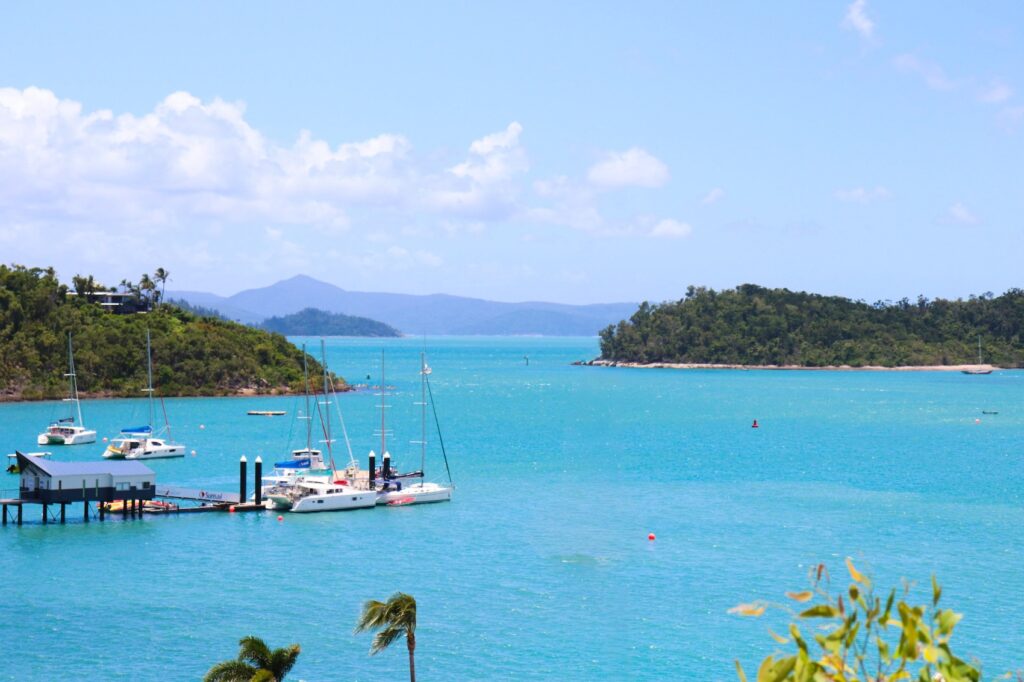
Sailing the Whitsundays feels like slipping into a world of turquoise water, quiet anchorages, and beaches so bright they seem lit from within. This itinerary brings you close to hidden bays, forested inlets, and the region’s most iconic viewpoints—laid-back days shaped by warm winds, salt air, and unhurried island wandering.
7 days
92 nautical miles
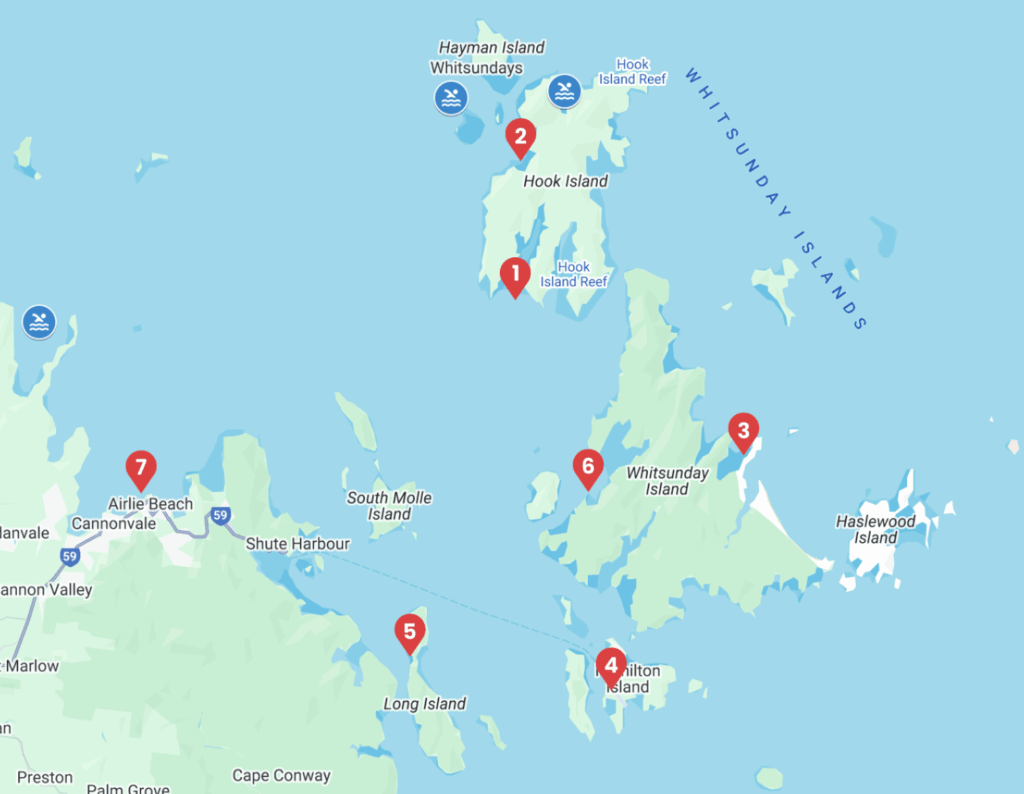
Airlie Beach ➜ Nara Inlet (Hook Island) ➜ Stonehaven Bay (Hook Island)➜ Tongue Bay (Hill Inlet / Whitehaven access) ➜ Hamilton Island ➜ Long Island ➜ Cid Harbour (Whitsunday Island) ➜ Airlie Beach
Highlights
A relaxed 7-day Whitsundays Sailing loop from Airlie Beach, linking classic anchorages, coral-fringed beaches, island walks and sheltered overnight havens.
Overview
The Whitsundays sit like a scattered necklace off Queensland’s tropical coast, protected by the Great Barrier Reef and famous for their mix of turquoise water, white silica sand and lush, hilly islands. For sailors, it is one of the world’s friendliest cruising grounds: line-of-sight navigation, national-park anchorages, and a generous spread of secure overnight spots whatever the forecast is doing. Trade winds and the shelter of the outer reef mean you often enjoy lively sailing without the full weight of the open ocean. From Airlie Beach you can reach fjord-like inlets such as Nara, wildlife-rich bays like Cid Harbour, and the iconic sweep of Whitehaven Beach with Tongue Point nearby. There are fringing reefs for snorkelling around Hook and Langford Islands, plus the comfort of Hamilton Island Marina when you fancy a proper shower, a restaurant meal or just plugging into shore power. It’s a rare area where complete beginners and seasoned skippers can share the same anchorages and still feel challenged, content and very reluctant to hand the boat back at week’s end. If you are a diver or snorkeller then don’t leave without the gear. Hire dive tanks and gear from Airlie, and also make sure you’re fully briefed on the marine life potential hazards, currents, rules etc and always ensure you protect this delicate environment.
Special Gems
The Whitsundays reward anyone willing to wander just a touch beyond the obvious, and this loop offers several gems well within easy reach. From Tongue Bay, Chalkie’s Beach on Haslewood Island sits only a short hop away and mirrors Whitehaven’s famous beauty with fewer footprints—its cool silica sand and calm, pale shallows make it a standout alternative. Border Island is another close option, home to gentle coral gardens where electric-blue damselfish swirl through pockets of reef; the colours here brighten even a cloudy day and feel wonderfully peaceful beneath the surface.
Near Stonehaven, Langford Island’s long sand spit is a classic low-tide wander: a narrow sweep of pale sand set beside lively fringing reef where turtles often glide past. Butterfly Bay, tucked around the corner, offers shaded, clear snorkelling when the conditions settle, making it an easy add-on without stretching the day.
Back at Nara Inlet, the Ngaro cultural site provides powerful insight into the islands’ long human story, while Cid Harbour remains one of the calmest places to watch turtles rise at dusk. These small, close-by experiences shape the Whitsundays’ real charm—quiet, vivid, and never far from your chosen anchorage.
Passage Conditions & Navigation Profile
Winds often blow WNW to NNW. Tide range roughly 1.3 m at neap to 3.8 m at spring
Read MoreLess
Weather, sea, wind considerations: Around the Whitsunday Islands (Airlie → Whitehaven Beach), winds often blow WNW to NNW at about 15–22 knots. Seas are typically choppy with short-period waves, but conditions are usually manageable in the dry season (Apr–Oct), when weather tends to be clearer.
Level of navigation required: Navigation should go beyond simple line-of-sight: a prepared navigation plan based on reliable charts is recommended — especially when threading between islands or approaching reefs and beaches like Whitehaven.
Tides and currents: Tide range across the Whitsundays runs roughly from 1.3 m at neap to around 3.8 m at spring tides. Tidal flow generally floods south and ebbs north, creating noticeable currents, especially in narrow channels or around islands.
Day 1 – Airlie Beach to Nara Inlet (Hook Island)
Leave Airlie Beach, clear the moored boats in Pioneer Bay and head out into Whitsunday Passage, with the mainland dropping astern and the bulk of Hook Island rising ahead on your starboard bow. Nara Inlet feels like a hidden pocket within Hook Island, a long and sheltered arm enclosed by steep, forested slopes that rise sharply from the water. The inlet has an almost fjord-like shape, with rock walls and narrow bends that create a quiet, enclosed atmosphere rarely found elsewhere in the Whitsundays. The water sits in deep shades of green and blue, often glassy in calm weather, and the surrounding vegetation softens sound, giving the entire place a hushed, almost ancient quality. Birdsong echoes across the hills, and in the early morning the light filters down through the ridgelines in pale gold bands. It’s a place where you instantly feel removed from the busier edges of the islands, surrounded by stillness and a sense of long history. Nara Inlet offers a peaceful, restorative beginning to any Whitsundays journey.
14 nautical miles
3 hrs sailing time
LUNCH STOP:none planned
MOORING:Anchoring only in mud; no public moorings; no fee, but observe park zoning and distance off shore.
Description
Depart Airlie Beach, weaving out through the mooring fields of Pioneer Bay before turning north-east into Whitsunday Passage. As the mainland falls astern, the bulk of Hook Island rises ahead. Nara Inlet cuts deep into its southern side, a long, fjord-like inlet with high, forested slopes and good shelter from most directions once inside. The approach is straightforward in good light: keep clear of the reef patches near the entrance, follow the recommended track and watch the depth sounder as you edge in to your chosen spot. The inlet narrows and bends gently, creating a peaceful, enclosed feel and a very forgiving first-night anchorage. Nara Inlet feels like a hidden pocket within Hook Island, a long and sheltered arm enclosed by steep, forested slopes that rise sharply from the water. The inlet has an almost fjord-like shape, with rock walls and narrow bends that create a quiet, enclosed atmosphere rarely found elsewhere in the Whitsundays. The water sits in deep shades of green and blue, often glassy in calm weather, and the surrounding vegetation softens sound, giving the entire place a hushed, almost ancient quality. Birdsong echoes across the hills, and in the early morning the light filters down through the ridgelines in pale gold bands. It’s a place where you instantly feel removed from the busier edges of the islands, surrounded by stillness and a sense of long history. Nara Inlet offers a peaceful, restorative beginning to any Whitsundays journey.
Attractions
Nara Inlet’s most distinctive experience is the short walk leading to the Ngaro cultural site, where interpretive signs describe the stories and history of the traditional owners. The rock art sits beneath a natural overhang with views back down the inlet, and spending time here adds depth to the natural beauty surrounding the anchorage. The quiet water makes the inlet ideal for gentle exploration by dinghy or paddleboard, especially along the shaded, rocky edges where small fish and occasional rays can be seen in the clear shallows. Many visitors enjoy simply relaxing on deck, listening to the shifting sounds of the bush as the day settles. Evenings in Nara often bring a soft chorus of wildlife and reflections on the water that turn the inlet into a mirror, creating an atmosphere that feels deeply calming after any amount of travel.
Cautions
Stay clear of reefs near the entrance, arrive with good light for eyeball navigation, and allow scope for strong gusts that can descend the slopes in trade-wind conditions.
Facilities
No shore facilities; bring all water, fuel and food from Airlie; waste must be stored aboard and later disposed of in designated mainland or marina facilities.
Day 2 – Nara Inlet to Stonehaven Bay
Stonehaven Bay stretches wide along Hook Island’s north-western edge, a broad and open anchorage framed by rugged hills and pockets of sandy shoreline. The bay has a generous, airy feeling, with long views across to Langford and Hayman Islands and clear visibility to the horizon. During the day, the water ranges from transparent turquoise to deeper blue as sunlight shifts across the bay, and coral patches sit close enough to see their shapes beneath the surface. The hills rise in uneven layers of green, giving the anchorage a natural amphitheatre quality, especially in quieter afternoon hours. Stonehaven is known for its brilliant sunsets: the western sky often lights up with warm oranges, reds and purples that reflect off the water in shimmering streaks. It feels spacious and open yet still comfortably sheltered, striking an ideal balance between dramatic scenery and relaxed island atmosphere.
11 nautical miles
2hrs sailing time
LUNCH STOP:none planned
MOORING:Mix of public moorings and anchoring areas; no direct fees, but adhere to colour codes and any time limits on buoys.
Description
Stonehaven Bay stretches wide along Hook Island’s north-western edge, a broad and open anchorage framed by rugged hills and pockets of sandy shoreline. The bay has a generous, airy feeling, with long views across to Langford and Hayman Islands and clear visibility to the horizon. During the day, the water ranges from transparent turquoise to deeper blue as sunlight shifts across the bay, and coral patches sit close enough to see their shapes beneath the surface. The hills rise in uneven layers of green, giving the anchorage a natural amphitheatre quality, especially in quieter afternoon hours. Stonehaven is known for its brilliant sunsets: the western sky often lights up with warm oranges, reds and purples that reflect off the water in shimmering streaks. It feels spacious and open yet still comfortably sheltered, striking an ideal balance between dramatic scenery and relaxed island atmosphere.
Attractions
Stonehaven’s appeal lies in its relaxed outdoor experiences. Snorkelling along the fringing coral provides glimpses of colourful fish weaving through bommies, with the chance to spot sea turtles cruising steadily along the reef’s edge. The bay is perfect for easy swims, floating beside the boat, or lying back on a paddleboard to watch the sky. Small, secluded beaches within Stonehaven offer quiet places to stretch your legs, enjoy the feel of warm sand, or sit with a book beneath the shade of a tree. A slow dinghy ride along the shoreline reveals rocky headlands shaped by years of wind and tide, each with its own character. As the afternoon settles, many sailors gather in the cockpit to take in the sunset, appreciating the changing colours across the bay and the calm, unhurried atmosphere that makes Stonehaven a favourite overnight spot.
Cautions
Gusts are common when trade winds are fresh; set plenty of scope, check holding and use chafe protection on snubbers and lines.
Facilities
No water, fuel or shops; treat Stonehaven as a fully self-sufficient stop with everything coming from Airlie or later Hamilton Island.
Day 3 – Stonehaven Bay to Tongue Bay (for Hill Inlet / Whitehaven)
Tongue Bay sits on the eastern side of Whitsunday Island, a calm and tucked-in basin surrounded by thick vegetation and high rocky ridges. The bay’s natural curve creates an intimate, almost secluded feeling, with still water and dense greenery providing a soothing backdrop. The colours here are distinctly tropical: deep greens on the hills, pale sand near the shores, and blue-green water that remains clear even in changing light. The narrow inlet beyond the beach hints at the dramatic landscapes hidden just over the rise. Tongue Bay has a quiet, natural character that contrasts beautifully with the wide-open expanses of nearby Whitehaven Beach. Even when other boats are present, it rarely feels busy due to its spread-out layout and the sheltering hills. It’s one of those anchorages where the sense of being immersed in untouched island terrain becomes part of the experience.
18 nautical miles
3hrs 30mins sailing time
LUNCH STOP:none planned
MOORING:Park moorings with time limits plus designated anchoring areas; no charge, but obey signage and marine park regulations.
Description
From Stonehaven, head east and then south around the northern tip of Whitsunday Island. The scenery opens out, with Hook to port and Whitsunday’s long ridges and beaches to starboard. Rounding the northeastern corner, you turn south down the more exposed eastern side, where Tongue Bay lies tucked behind Tongue Point. The bay provides anchoring and park moorings in a largely natural setting, with forested slopes and the narrow inlet leading up towards Hill Inlet. This stop positions you perfectly to access the famous lookout over Whitehaven’s swirling sands, while keeping the boat secure in deeper water rather than attempting to work into very shallow channels. Tongue Bay sits on the eastern side of Whitsunday Island, a calm and tucked-in basin surrounded by thick vegetation and high rocky ridges. The bay’s natural curve creates an intimate, almost secluded feeling, with still water and dense greenery providing a soothing backdrop. The colours here are distinctly tropical: deep greens on the hills, pale sand near the shores, and blue-green water that remains clear even in changing light. The narrow inlet beyond the beach hints at the dramatic landscapes hidden just over the rise. Tongue Bay has a quiet, natural character that contrasts beautifully with the wide-open expanses of nearby Whitehaven Beach. Even when other boats are present, it rarely feels busy due to its spread-out layout and the sheltering hills. It’s one of those anchorages where the sense of being immersed in untouched island terrain becomes part of the experience
Attractions
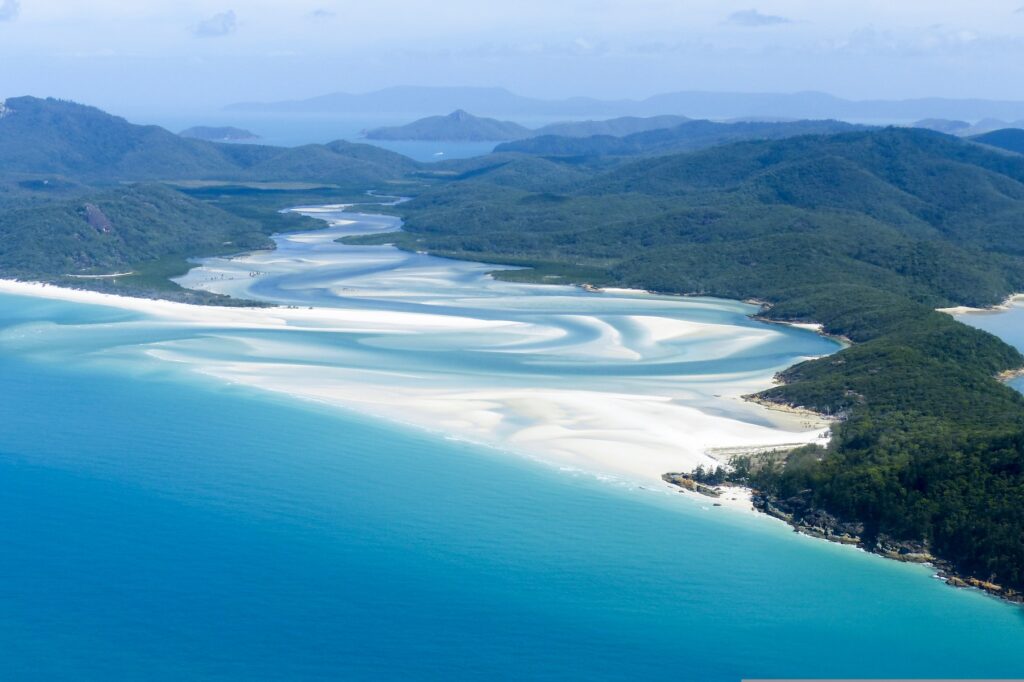
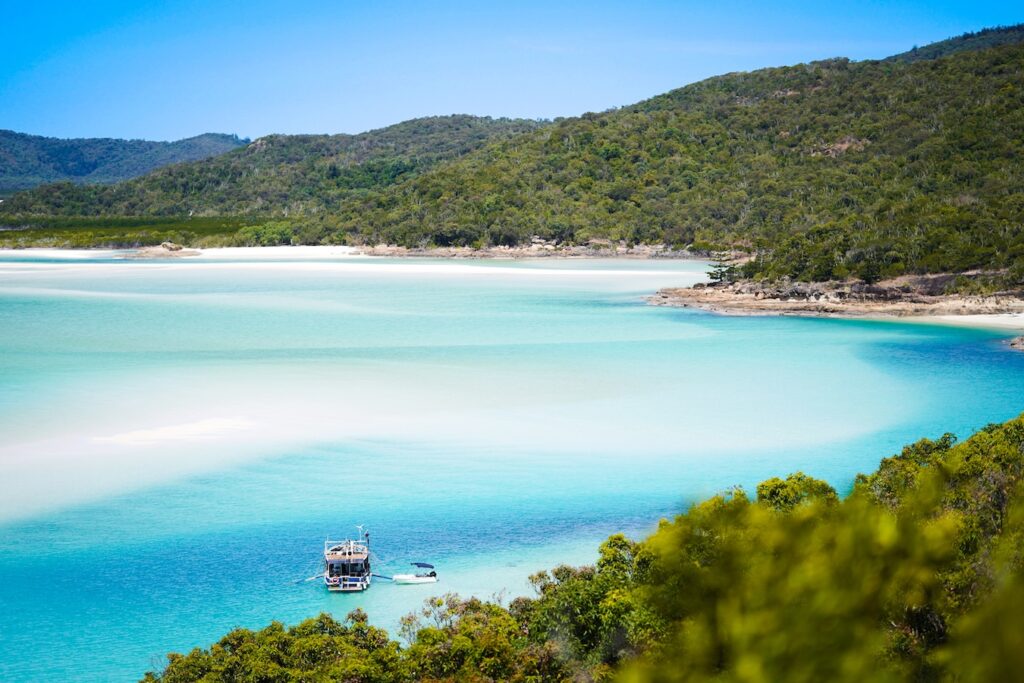
The highlight of Tongue Bay is the walking track to the Hill Inlet lookout, where visitors are rewarded with one of Australia’s most iconic views. The swirling blend of white silica sand and shifting turquoise channels forms patterns that change with every tide, creating scenery that feels alive. The beaches near the anchorage offer clear shallows for wading and exploring, often with rays gliding along the bottom or small fish darting between sunlit patches. Down at the shoreline, the sand is soft and cool underfoot, ideal for slow meandering walks that reveal delicate textures left behind by the tide. Wildlife is abundant: seabirds ride the thermals above the point, and the interplay of light across the water creates a natural show throughout the day. Tongue Bay offers a blend of tranquillity, natural beauty and access to one of the region’s most unforgettable outlooks.
Cautions
Tidal currents can be brisk near Hill Inlet; keep a close eye on depth, avoid pushing into poorly charted shallows and maintain safe clearance from reef and bommies.
Facilities
No fuel, water or shops; some park toilets at day-use areas; all provisions and rubbish storage handled on board until Hamilton Island.
Day 4 – Whitehaven / Tongue Bay to Hamilton Island Marina
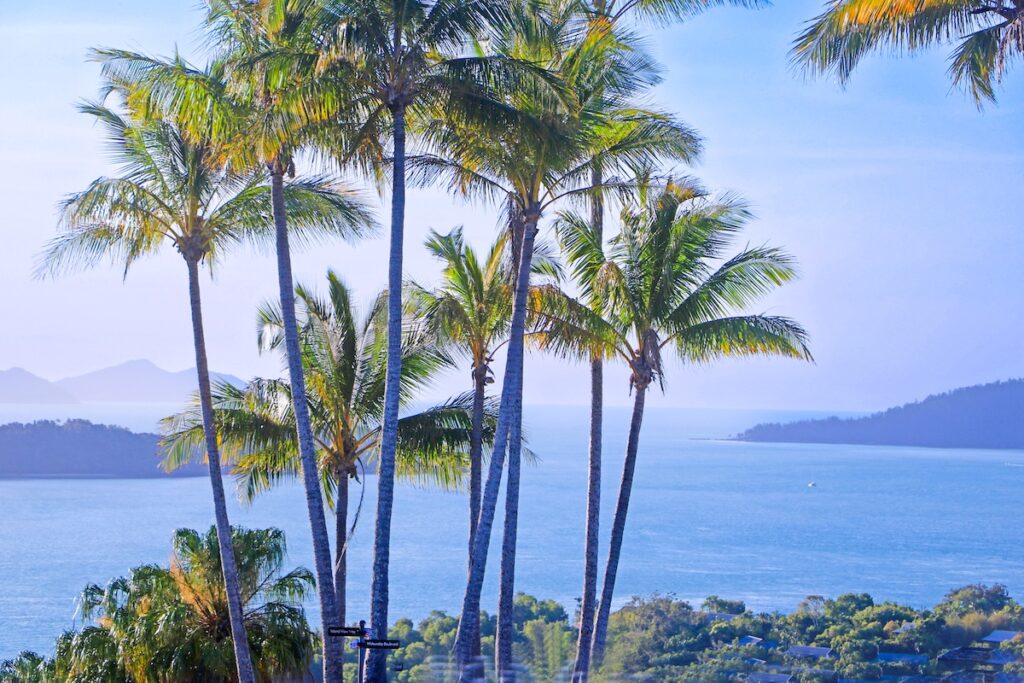
Hamilton Island is a vibrant blend of natural beauty and resort charm, with steep ridges, palm-lined paths and a colourful village atmosphere that instantly feels lively after quieter anchorages. The marina sits neatly beneath the slopes, giving the area the look of a small tropical harbour town carved into the hillside. Buildings accented in bright colours, landscaped gardens and buzzing waterfront cafés create a welcoming environment. Beyond the marina, the island’s contours rise into lush hills that catch the changing light throughout the day. Walking paths weave through greenery, revealing views across the surrounding islands and passages. Hamilton manages to feel both modern and scenic, with a relaxed holiday atmosphere enhanced by its blend of facilities, beaches and natural lookouts. It offers a comfortable pause in the week where the conveniences of land meet the beauty of the islands.
15 nautical miles
3hrs sailing time
LUNCH STOP:none planned
MOORING:Marina berths booked via Hamilton Island Marina; overnight fees apply and normally include water and access to shore power.
Description
Hamilton Island is a vibrant blend of natural beauty and resort charm, with steep ridges, palm-lined paths and a colourful village atmosphere that instantly feels lively after quieter anchorages. The marina sits neatly beneath the slopes, giving the area the look of a small tropical harbour town carved into the hillside. Buildings accented in bright colours, landscaped gardens and buzzing waterfront cafés create a welcoming environment. Beyond the marina, the island’s contours rise into lush hills that catch the changing light throughout the day. Walking paths weave through greenery, revealing views across the surrounding islands and passages. Hamilton manages to feel both modern and scenic, with a relaxed holiday atmosphere enhanced by its blend of facilities, beaches and natural lookouts. It offers a comfortable pause in the week where the conveniences of land meet the beauty of the islands.
Attractions
Hamilton Island offers plenty to fill a leisurely day. Stroll along the marina boardwalk for snacks, ice-cream or a drink, enjoying the lively feel of boats coming and going. The island’s walking tracks range from gentle paths through landscaped areas to steeper climbs offering panoramic views of neighbouring islands. Many visitors enjoy taking the island’s shuttle or golf buggy up to One Tree Hill, a popular lookout for sunset colours spreading across Whitsunday Passage. The resort pools provide an easy option for cooling off between short wanderings, while the beachfront adds a quieter setting for sunbathing or swimming. Small shops, cafés and restaurants create a relaxed village feel, ideal for browsing or settling into a long lunch. Hamilton offers a refreshing mix of scenery, comfort and island atmosphere that contrasts nicely with the quieter national-park anchorages.
Cautions
Expect ferry wash and busy fairways; prepare fenders and lines in advance, brief crew on docking roles and follow marina staff directions closely during arrival and departure.
Facilities
Full services available: fuel dock, water, shore power, groceries, restaurants, bars, medical centre and pharmacy; charges set by the marina and island businesses.
Day 5 – Hamilton Island to Long Island
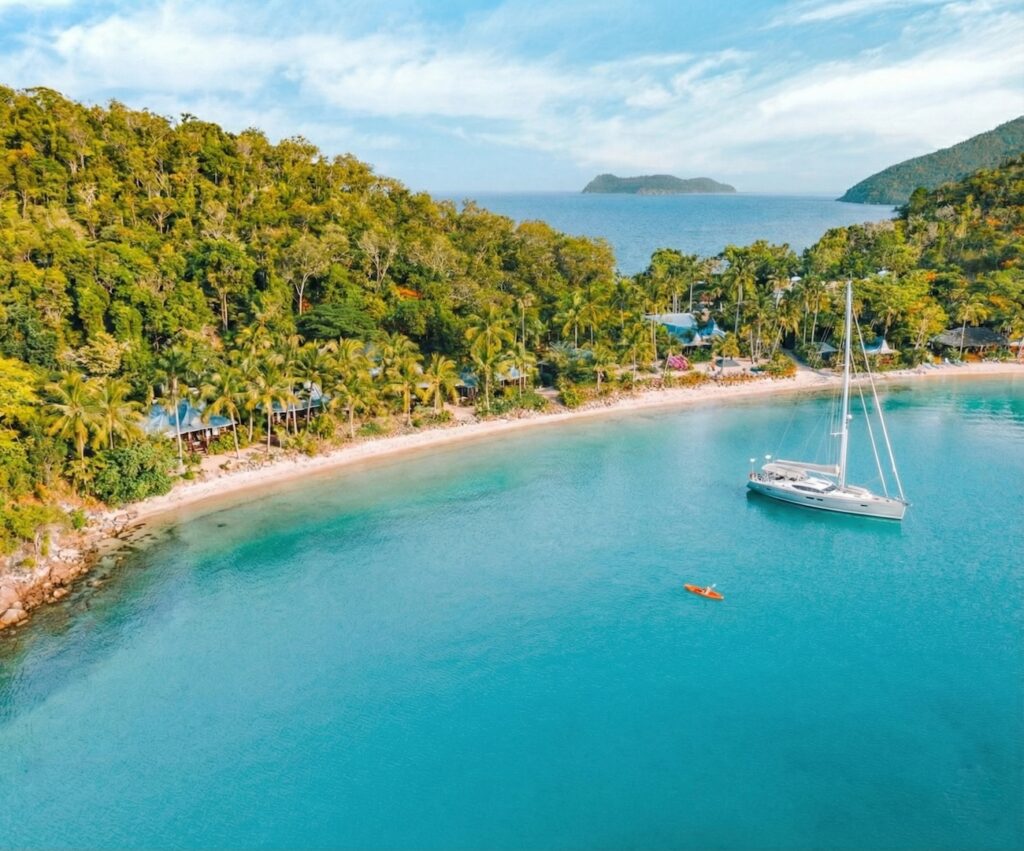
Long Island stretches like a slender green ribbon between the Molle Group and the mainland, with steep wooded slopes that fall almost directly into the sea. The island has a noticeably quieter, more intimate feel than the larger central islands, offering anchorages where the soundscape is dominated by rustling leaves, birdsong and the gentle movement of water along the shoreline. Narrow beaches appear between rocky headlands, each with its own small curve of sand and patches of shade that feel pleasantly secluded. The forested ridgelines run the length of the island, catching soft light at sunrise and casting cool shadows in the late afternoon. The surroundings create an atmosphere that feels close to nature yet not remote, giving Long Island a relaxed, grounded mood. It’s the kind of place where the scenery encourages you to slow down, look up at the hills and breathe more deeply.
8 nautical miles
2hrs sailing time
LUNCH STOP:none planned
MOORING:Anchoring or resort-managed moorings depending on current arrangements; some fees may apply for private moorings or shore access—confirm with your charter company.
Description
Long Island stretches like a slender green ribbon between the Molle Group and the mainland, with steep wooded slopes that fall almost directly into the sea. The island has a noticeably quieter, more intimate feel than the larger central islands, offering anchorages where the soundscape is dominated by rustling leaves, birdsong and the gentle movement of water along the shoreline. Narrow beaches appear between rocky headlands, each with its own small curve of sand and patches of shade that feel pleasantly secluded. The forested ridgelines run the length of the island, catching soft light at sunrise and casting cool shadows in the late afternoon. The surroundings create an atmosphere that feels close to nature yet not remote, giving Long Island a relaxed, grounded mood. It’s the kind of place where the scenery encourages you to slow down, look up at the hills and breathe more deeply.
Attractions
Long Island’s main appeal lies in the simplicity of its natural setting. Well-established walking tracks lead through the national park areas, weaving beneath tall trees and offering glimpses of the mainland ranges across the water. These trails are peaceful and shaded, ideal for an unhurried stroll or a longer wander if you want to explore inland. The beaches are inviting places to swim, sit with a towel in the shade or enjoy a quiet hour watching small fish darting in the shallows. If a resort on the island is operating during your visit, you may be able to go ashore for a drink or meal, adding a bit of low-key comfort to the stop. Even without that option, the combination of island scenery, warm water and gentle ambiance creates a pleasant mid-trip pause that feels refreshingly different from the busier, iconic sites.
Cautions
Check latest local information on resort operations, mooring availability and any exclusion zones; be aware of tidal set when close to shore and give reef and shoals respectful clearance.
Facilities
Facilities depend on resort status; do not rely on water or fuel; limited groceries or bar/restaurant options may be available, but plan as though you are self-sufficient until back at Airlie.
Day 6 – Long Island to Cid Harbour
Cid Harbour is a deep, tranquil basin cradled by tall forested hills that rise dramatically from the water’s edge. The anchorage feels expansive yet sheltered, with multiple coves giving it a layered, natural shape. The surrounding slopes are thick with greenery, and as the sun moves across the sky, the colours shift from bright emerald to deep shadowed greens along the ridgelines. There’s a sense of quiet permanence here; the landscape seems largely unchanged by time, and the water often sits calm and reflective in the morning before taking on a soft breeze later in the day. Wildlife is common, from seabirds circling overhead to turtles surfacing between anchored boats. Despite its popularity, Cid Harbour retains a peaceful, almost contemplative quality, making it one of the most restful and grounding locations in the Whitsundays.
10 nautical miles
2hrs sailing time
LUNCH STOP:none planned
MOORING:Anchoring only; no public moorings; no fees but obey any seasonal or advisory notices from local authorities.
Description
From Long Island you curve back north-east across Whitsunday Passage towards the western side of Whitsunday Island. Cid Harbour lies between Cid Island and the main island, a large, sheltered indentation with several favoured anchorages such as Sawmill Bay and Dugong Beach. Forested hills surround the harbour on all sides, giving a feeling of being tucked well away from the more open waters you crossed earlier in the trip. Depths shelve gradually from deeper water in the middle towards shallower patches closer to shore, and the holding is generally good in sand and mud, making this a dependable spot for a final night at anchor. Cid Harbour is a deep, tranquil basin cradled by tall forested hills that rise dramatically from the water’s edge. The anchorage feels expansive yet sheltered, with multiple coves giving it a layered, natural shape. The surrounding slopes are thick with greenery, and as the sun moves across the sky, the colours shift from bright emerald to deep shadowed greens along the ridgelines. There’s a sense of quiet permanence here; the landscape seems largely unchanged by time, and the water often sits calm and reflective in the morning before taking on a soft breeze later in the day. Wildlife is common, from seabirds circling overhead to turtles surfacing between anchored boats. Despite its popularity, Cid Harbour retains a peaceful, almost contemplative quality, making it one of the most restful and grounding locations in the Whitsundays.
Attractions
Cid Harbour offers a blend of nature, walking and quiet observation. The forest track beginning near Sawmill Beach leads into cool, shaded bushland, offering a comfortable walk for those wanting to stretch their legs. Adventurous visitors sometimes choose the longer route toward Whitsunday Peak, rewarded with impressive, wide-open island views from the top. Closer to the water, the shoreline provides gentle areas to explore by dinghy or on foot, revealing small coves, shells and the occasional ray gliding along the sandy bottom. Turtles are frequently seen surfacing for air, often quite close to anchored yachts, adding to the calm, natural charm of the harbour. Many sailors treat this stop as a chance to unwind properly — reading in the cockpit, enjoying a long swim or simply letting the stillness settle in just before the final return to Airlie Beach.
Cautions
Authorities strongly discourage swimming here due to historical shark incidents; respect stinger precautions in season and be cautious of tidal flows when anchoring or dinghying near Cid Island.
Facilities
No fuel, water or shops; all provisions and medical needs must be covered either from Hamilton or Airlie; waste retention required until you reach appropriate disposal points.
Day 7 – Cid Harbour to Airlie Beach
Airlie Beach sits on the curve of a broad bay backed by rolling green hills dotted with palm trees, homes and resorts. After several days among forested islands, the return to Airlie has a lively, colourful energy that feels welcoming rather than jarring. The waterfront blends tropical gardens with walking paths and a laid-back coastal vibe, while the lagoon and foreshore create a central hub where visitors gather throughout the day. Boats of all kinds move in and out of the mooring fields, giving the bay a gentle sense of motion. Despite being the access point to the islands, Airlie has kept a relaxed, small-town feel, with bright shopfronts, shaded cafés and hints of music drifting from the bars in the early evening. It’s a place that manages to be practical and cheerful at the same time, easing you back toward land life.
16 nautical miles
3hrs sailing time
LUNCH STOP:none planned
MOORING:Return to your charter company’s berth or designated mooring; marina or managed-mooring fees apply as agreed in your charter contract.
Description
Your final leg takes you out of Cid Harbour and north or north-west into Whitsunday Passage before turning west towards the mainland. As Whitsunday Island falls astern, the hills behind Airlie become clearer, dotted with houses and resorts. The passage is usually an enjoyable reaching or upwind sail depending on wind direction, giving you one more chance to play with sail trim and reflect on the loop you’ve completed. Approaching Pioneer Bay, you’ll drop sails in good time, motor through the familiar moorings and either return to your charter base berth or pick up the specified mooring as per hand-over instructions. Airlie Beach sits on the curve of a broad bay backed by rolling green hills dotted with palm trees, homes and resorts. After several days among forested islands, the return to Airlie has a lively, colourful energy that feels welcoming rather than jarring. The waterfront blends tropical gardens with walking paths and a laid-back coastal vibe, while the lagoon and foreshore create a central hub where visitors gather throughout the day. Boats of all kinds move in and out of the mooring fields, giving the bay a gentle sense of motion. Despite being the access point to the islands, Airlie has kept a relaxed, small-town feel, with bright shopfronts, shaded cafés and hints of music drifting from the bars in the early evening. It’s a place that manages to be practical and cheerful at the same time, easing you back toward land life.
Attractions
Once ashore, Airlie offers plenty of ways to wind down after a week among the islands. The lagoon is a favourite spot for a fresh-water swim, surrounded by lawns and shady areas ideal for relaxing. The main street is lined with cafés, restaurants and small shops, making it easy to enjoy a final meal, pick up a keepsake or simply sit with a cold drink and watch the world go by. The foreshore walkway provides a pleasant, easy stroll along the waterfront, with views across Pioneer Bay that feel especially soothing at sunset. Some visitors choose to unwind with a massage or spa treatment, while others linger in the marina precinct to enjoy the casual buzz of boats returning from their own adventures. However you spend your time, Airlie offers a comfortable, friendly finish to a week of Whitsundays exploration.
Cautions
Follow base arrival procedures, refuel as required, and ensure holding tanks, rubbish and gear are all handled according to charter and marina rules before hand-over.
Facilities
Full services in Airlie Beach: water, fuel, shore power, groceries, restaurants, bars, laundries and medical care; costs vary by provider and are usually settled at charter end.
Facilities Summary
Stop
Water
Fuel
Power
Groceries
Restaurants
Medical/Pharmacy
Airlie Beach
✅
✅
✅
Large
Many
Full services
Nara Inlet
⚪
⚪
⚪
⚪
⚪
⚪
Stonehaven Bay
⚪
⚪
⚪
⚪
⚪
⚪
Tongue Bay
⚪
⚪
⚪
⚪
⚪
⚪
Hamilton Island
✅
✅
✅
Medium
Many
Clinic, pharmacy
Long Island
Limited
⚪
⚪
Very small
Few
⚪
Cid Harbour
⚪
⚪
⚪
⚪
⚪
⚪
Consider the Reverse Route
Run as written, this itinerary moves north first, then steadily south, with no need to backtrack. That keeps daily legs efficient and makes natural use of southeast trades: you often enjoy pleasant reaching and upwind angles early on, then more sheltered or shorter hops later in the week when people are starting to relax. Nara and Stonehaven give you strong, classic Hook Island anchorages up front, while Tongue Bay and Hamilton cluster the “iconic” Whitehaven and marina experiences mid-trip. Long Island and Cid Harbour then taper the journey back towards the mainland with quieter evenings and straightforward final legs. Reversing the route—Airlie, Cid, Long Island, Hamilton, Tongue Bay, Stonehaven, Nara, Airlie—can also work, especially if a strong trade-wind pattern means you’d prefer different wind angles on particular legs. The key is to keep the same chain of anchorages and overall geography, avoiding needless north–south–north zig-zags. With that principle respected, you can comfortably tweak individual days around weather windows while still enjoying the same anchorages, walks and snorkelling spots.
Support Aids
Whether chartering or welcoming friends onboard your own yacht, these FREE KiwiSailor aids will come in handy and help ease your preparations ….meaning the first drink on this journey is so much more enjoyable:
There are so many variables to consider when planning an itinerary and estimating sailing times and distances, so one needs to appreciate that these are an estimate only.
Read MoreLess
Planned Stopping Locations
As they say, you always plan to ‘sail toward’ and not ‘sail to’, as something unplanned could happen. So one should also consider a ‘bolt-hole’ (a sheltered location where a you can find refuge from bad weather for example). I have not planned for these as there are naturally many variables and options to allow for. So look ahead in the plan and always keep an eye on the weather.
Sailing Distance
I use a planning method that adds a safety margin and thus produces a distance, which tends to be 10–20% longer than charted straight-line or optimised-tool calculations. Assuming:
clearing headlands
tacking angles in light wind
staying outside rocky headlands/fringes
not hugging the coastline
Sailing Time
Sailing time is obviously a function of distance and speed, and again speed can vary considerably. My approach here assumes:
round to the nearest 30 mins
relatively clean hull
a cruising speed of 6 knots, which provides small allowances for:
leaving and entering harbours (but ignore berthing or for example anchoring drop/retrieval time)
trimming sails
occasional lulls
motor sailing if wind is too light to maintain 6 knots
Ultimately my approach is to allow for “steady” sailing as you would normally on vacation, rather than sporty Saturday racing at the local club.
To provide the best experiences, we use technologies like cookies to store and/or access device information. By clicking Accept you are consenting to these technologies and this will allow us to process data such as browsing behaviour or unique IDs on this site. By clicking the close button ‘X’ you will not be consenting, which may adversely affect certain features and functions.
Functional
Always active
The technical storage or access is strictly necessary for the legitimate purpose of enabling the use of a specific service explicitly requested by the subscriber or user, or for the sole purpose of carrying out the transmission of a communication over an electronic communications network.
Preferences
The technical storage or access is necessary for the legitimate purpose of storing preferences that are not requested by the subscriber or user.
Statistics
The technical storage or access that is used exclusively for statistical purposes.The technical storage or access that is used exclusively for anonymous statistical purposes. Without a subpoena, voluntary compliance on the part of your Internet Service Provider, or additional records from a third party, information stored or retrieved for this purpose alone cannot usually be used to identify you.
Marketing
The technical storage or access is required to create user profiles to send advertising, or to track the user on a website or across several websites for similar marketing purposes.